




Carrer de Pere Francès 21, Eivissa – Ibiza, Spain
Tomodachi is an intimate underground electronic music club in Ibiza Town, created as a deliberate counterpoint to the large-scale superclub culture for which the island has become internationally famous. Opened in summer 2025, the venue focuses on extended DJ sets, high-quality analogue sound, minimal production and a dancefloor where phones and VIP areas are absent.
Its name comes from the Japanese word tomodachi, meaning “friends”. The choice reflects the philosophy behind the project: a small club built around music, recurring artists and community rather than spectacle, celebrity or the separation of audiences into different levels of access.
Origins
Tomodachi was founded by Danny Miller, the British DJ and promoter behind Real Gang.
Miller had already developed a long relationship with Ibiza before opening the club. Real Gang operated as a record label and party series and became particularly associated with the underground house and minimal scene. Its events had previously taken place at Ibiza Underground, the much-loved club near San Rafael that for years represented an alternative to the island’s increasingly commercial nightlife.
The experience of running parties on Ibiza gradually developed into the idea of establishing a permanent space.
Rather than looking for another enormous venue, Miller moved in the opposite direction. The objective was to create something closer to the intimate clubs and after-hours spaces that had historically played an important role in electronic music: a relatively small room, a carefully designed sound system and enough time for DJs to develop a musical narrative.
The eventual location was found in Ibiza Town on Carrer de Pere Francès. Before becoming a club, the space had operated as a churros restaurant — an unlikely origin for what would soon become one of the island’s most discussed new underground venues.
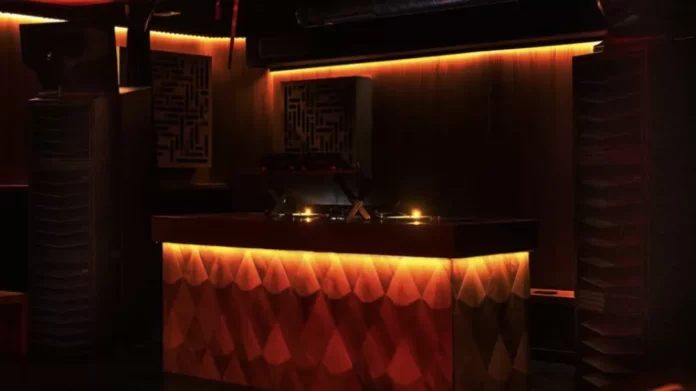
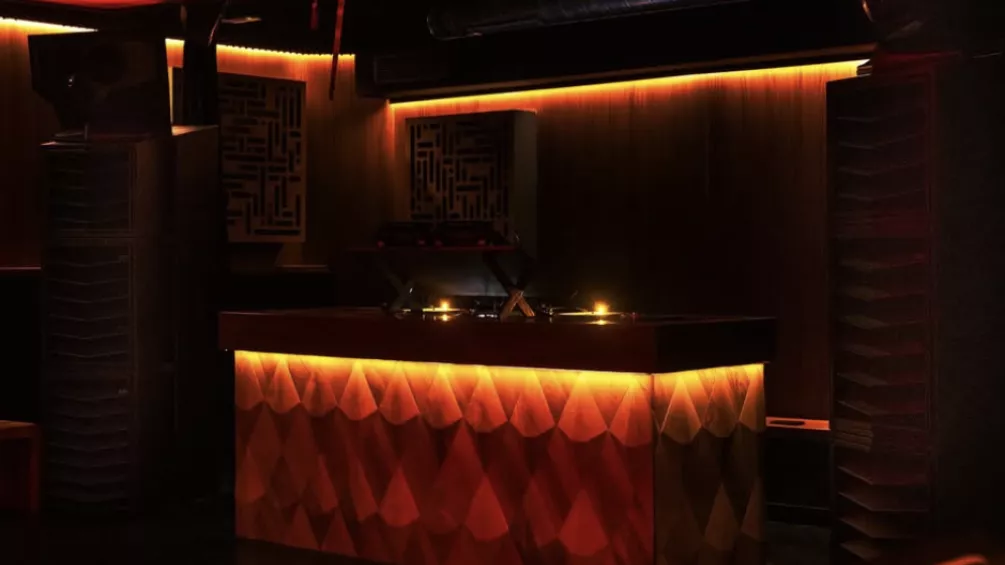
The conversion retained a deliberately stripped-back approach. Tomodachi was not intended to compete visually with Ibiza’s billion-euro nightlife industry. Instead, the room was designed around sound, red lighting, a low-key DJ booth and physical proximity between the artist and audience.
Opening in 2025
Tomodachi opened on July 24, 2025, slightly later than originally planned after an electrical problem forced the team to postpone its first night.
The opening series immediately established the musical direction of the venue. Artists including E.LINA, A.M. Project, Jeremy Weeks, Nicolau, Maher Daniel and Leavf appeared during its first nights, followed during the season by DJs such as Dana Ruh, Samuel Deep, Tania Vulcano, Voigtmann, Tristan da Cunha, Per Hammar and others associated with the deeper and more minimal side of underground house music.
Rather than relying on short headline performances, Tomodachi placed particular emphasis on extended sets. The format gives DJs several hours to move between styles and tempos, bringing the experience closer to traditional club residencies than the tightly scheduled line-ups increasingly common at large festivals and superclubs.
This approach also reflects the musical background of Real Gang. Minimal house, deep house, tech house and stripped-back forms of techno form the foundation of the club’s identity, although the programming is intentionally flexible enough to allow artists to move outside narrow genre definitions.
Sound
The sound system is one of the defining elements of Tomodachi.
The venue was equipped with a custom TPI TYPE.MFR system, developed specifically for the dimensions and acoustic character of the room. Rather than using enormous amounts of amplification simply to create volume, the system is designed around clarity, detail and physical presence.
This approach places Tomodachi within the growing international culture of sound-focused clubs and listening spaces. In these venues, the sound system is treated almost as an instrument in itself rather than simply technical infrastructure.
Because the room is small, the relationship between DJ, audience and sound system is unusually direct. There is no monumental stage separating the performer from the dancefloor, and the booth functions as part of the room rather than its visual centre.
The philosophy is intentionally simple: the music should provide most of the production.
No Phones, No VIP
Tomodachi also introduced a strict no-phones policy on the dancefloor.
Visitors are expected to keep their phones away while dancing, preventing the room from filling with screens, photographs and continuous video recording. The rule is designed both to protect privacy and to encourage people to remain engaged with the music and each other.
This is particularly significant on Ibiza, where nightlife has become deeply connected with social media. Large clubs increasingly operate as spectacular visual environments filled with LED screens, elaborate stage designs and moments specifically suited to being filmed and shared online.
Tomodachi deliberately removes this layer from the experience.
The same principle applies to VIP culture. There are no separate VIP barriers dividing the audience around the dancefloor. Everyone occupies essentially the same club environment, reinforcing the idea that the room exists primarily for collective listening and dancing.
Together, these decisions give Tomodachi an almost anti-superclub philosophy: fewer people, fewer visual distractions, longer sets and less hierarchy.
Ibiza Underground and the Alternative Ibiza
Although Ibiza is internationally associated with enormous clubs such as Amnesia, Pacha, Hï Ibiza and Ushuaïa, the island has always maintained a parallel underground culture.
Small clubs, private parties, beach gatherings, after-hours sessions and independent promoters have existed alongside the major venues for decades. These spaces have often been important incubators for sounds that later became part of mainstream Ibiza nightlife.
Ibiza Underground was one of the best-known modern examples of this alternative tradition. Real Gang’s history there creates a direct connection between Tomodachi and this less visible side of the island.
The opening of Tomodachi therefore does not represent the arrival of underground club culture on Ibiza. Instead, it represents an attempt to provide that culture with another permanent home at a time when the island’s largest venues are moving towards increasingly sophisticated entertainment production.
Its location in Ibiza Town is also significant. Unlike many major clubs situated along roads outside the urban centre or around Playa d’en Bossa and San Rafael, Tomodachi operates within the fabric of the town itself. Its modest entrance and relatively small scale make it closer to the traditional idea of a neighbourhood nightclub than a destination entertainment complex.
Present
Tomodachi returned for its second season in 2026, demonstrating that the project was intended to continue beyond its experimental first summer. It also operated during part of the winter, an important distinction on an island where much of the nightlife industry effectively disappears outside the tourist season.
Real Gang continues to play an important role in the programme, while collaborations with other promoters and international artists have expanded the musical network surrounding the venue.
The basic philosophy, however, has remained largely unchanged: underground electronic music, extended sets, a custom sound system, no phones and no VIP hierarchy.
Tomodachi and other recent small-scale projects such as Nocturna suggest an interesting development within contemporary Ibiza. While the island’s superclubs continue to grow technologically and economically, another part of the scene is moving deliberately towards intimacy.
The two approaches do not necessarily compete for the same audience. Instead, they illustrate how unusually broad Ibiza’s club ecosystem has become.
For Tomodachi, smallness is not a limitation to overcome but the central element of the project. The club attempts to recover something fundamental that can easily disappear inside large-scale nightlife: a DJ with enough time to tell a story, a carefully tuned sound system and a room full of people paying attention.
In that sense, the meaning of its name is appropriate. Tomodachi is less about creating another Ibiza landmark than about creating a room in which strangers can temporarily feel like friends.
