




Gedempt Hamerkanaal 40 – Amsterdam, Netherlands
Garage Noord is one of Amsterdam’s most distinctive underground electronic music venues. Located in Amsterdam-Noord, away from the historic centre and the city’s traditional nightlife districts, the club occupies a former garage that has been gradually transformed into a small, deliberately unconventional cultural space.
Opened in 2017, Garage Noord developed a reputation for adventurous programming, intimate parties and a strong connection with Amsterdam’s local electronic music community. Rather than defining itself through one genre, the venue moves between techno, house, electro, bass, experimental electronics, ambient, live music and sounds that sit somewhere between club culture and the avant-garde.
Its relatively small scale is fundamental to its identity. Garage Noord feels less like a professionally designed nightclub than a space that has evolved organically around the people using it.
Origins
Garage Noord opened in 2017 at Gedempt Hamerkanaal 40 in Amsterdam-Noord. The project was created inside a former car workshop in an industrial area north of the IJ. At the time, this part of Amsterdam was already undergoing a major transformation.
For much of the twentieth century, Amsterdam-Noord was associated with shipbuilding, manufacturing and working-class neighbourhoods. The northern waterfront contained enormous industrial complexes, including the Nederlandsche Dok en Scheepsbouw Maatschappij — NDSM — once one of the country’s most important shipyards.
When much of this industry disappeared, large areas of Noord were left with warehouses, workshops and industrial land that gradually attracted artists, independent businesses and cultural projects. Rather than radically redesigning its building, the venue retained much of the character of the former garage. Concrete floors, functional architecture, exposed materials and a relatively improvised interior became part of the experience. The result was intentionally different from a conventional purpose-built nightclub.
From Garage to Club
Garage Noord initially developed around a mixture of music, food and informal cultural activity. The space was not conceived simply as a room that opened at midnight and disappeared again in the morning. A restaurant and bar formed part of the project, creating an environment where people could arrive before the club programme began and where the distinction between social space and nightlife was less rigid.
The garage itself provided an unusually flexible environment. Different areas could be used for DJs, live performances and gatherings, while the limited capacity encouraged a close relationship between artists and audience. The architecture, sound system and people inside the room provided most of the atmosphere.
This DIY quality became one of Garage Noord’s strongest characteristics and helped the venue develop an identity independent of Amsterdam’s larger club institutions.
Music
Garage Noord is difficult to describe through genre. Techno and house appear regularly, but neither defines the programme. Electro, breaks, dub, bass, jungle, experimental electronics, ambient and live performances can all appear within the same calendar.
This eclecticism reflects a broader part of Amsterdam’s electronic music culture, where DJs, record collectors, radio platforms and independent labels frequently operate outside rigid genre boundaries. Garage Noord provides an environment where this approach can become particularly adventurous.
Instead of relying primarily on internationally recognisable headline names, the venue has consistently provided space for local DJs, emerging artists, collectives and selectors whose music might be difficult to place within a larger commercial club. International guests still appear, but they are generally integrated into the wider programme rather than presented as celebrities detached from the local scene.
A visitor may encounter functional dancefloor techno on one occasion and a much stranger combination of broken rhythms, experimental electronics and live performance on another. For Garage Noord, that unpredictability is part of the point.
Echobox Radio
An important part of the wider ecosystem surrounding Garage Noord is Echobox Radio. The community-oriented online radio station broadcasts from Amsterdam-Noord and provides a platform for local DJs, musicians, collectives and cultural projects. Its relationship with Garage Noord illustrates how contemporary electronic music scenes increasingly extend beyond individual clubs.
Radio, record labels, record stores, studios and nightlife spaces can reinforce one another, allowing artists to develop outside the conventional cycle of releases and headline bookings. Echobox gives selectors opportunities to explore music that may not necessarily work on a peak-time dancefloor, while Garage Noord provides a physical environment where parts of the same community can meet.
This connection between broadcasting and club culture places the venue within a broader Amsterdam tradition that also includes institutions such as Red Light Radio and Radio Radio.
Amsterdam-Noord
The location of Garage Noord is central to understanding the club. For visitors arriving from central Amsterdam, crossing the IJ creates a noticeable geographical and psychological separation from the historic city.
Amsterdam-Noord traditionally sat outside the tourist image of canals, narrow seventeenth-century houses and dense central neighbourhoods. Shipyards, factories and workshops occupied large parts of the waterfront, while residential districts were built for the workers employed there. Former industrial areas became some of Amsterdam’s most important redevelopment zones. NDSM developed into a major cultural district, while new residential towers, offices, restaurants and cultural institutions appeared along the northern waterfront.
The opening of the Noord/Zuidlijn metro in 2018 accelerated the integration of Noord with the rest of Amsterdam. Industrial buildings provide exactly the kind of unconventional architecture that clubs and artists can adapt cheaply. But once those cultural projects help make an area attractive, redevelopment and rising property values can eventually threaten their existence.
A Different Amsterdam Club Model
Garage Noord represents a very different model from many of Amsterdam’s internationally known clubs. Trouw and De School became large cultural institutions with carefully developed architectural identities and international reputations. Shelter created a technologically sophisticated underground dancefloor beneath the A’DAM Tower. RADION occupies a former industrial building and operates at a larger scale with extended club nights.
Garage Noord is smaller, less formal and intentionally harder to categorise.
A restaurant can become part of a club night. A DJ set can sit next to an experimental concert. An internationally touring artist can appear alongside someone deeply embedded in Amsterdam’s local scene. There is less distinction between institution and community and this gives Garage Noord something of the character traditionally associated with independent squats, artist-run spaces and temporary clubs, despite operating as an established venue.
The Dancefloor
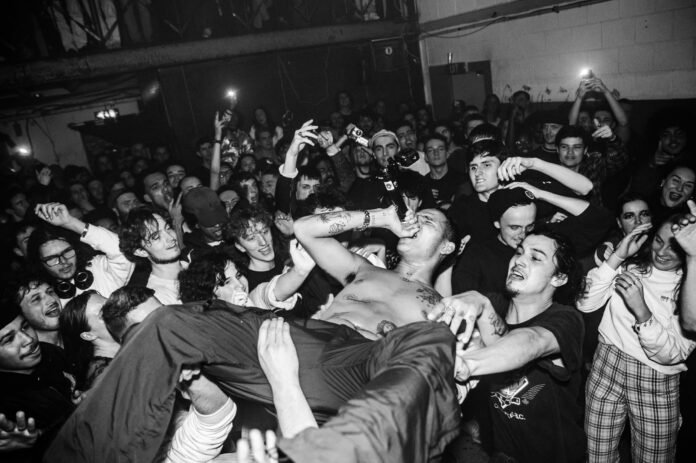
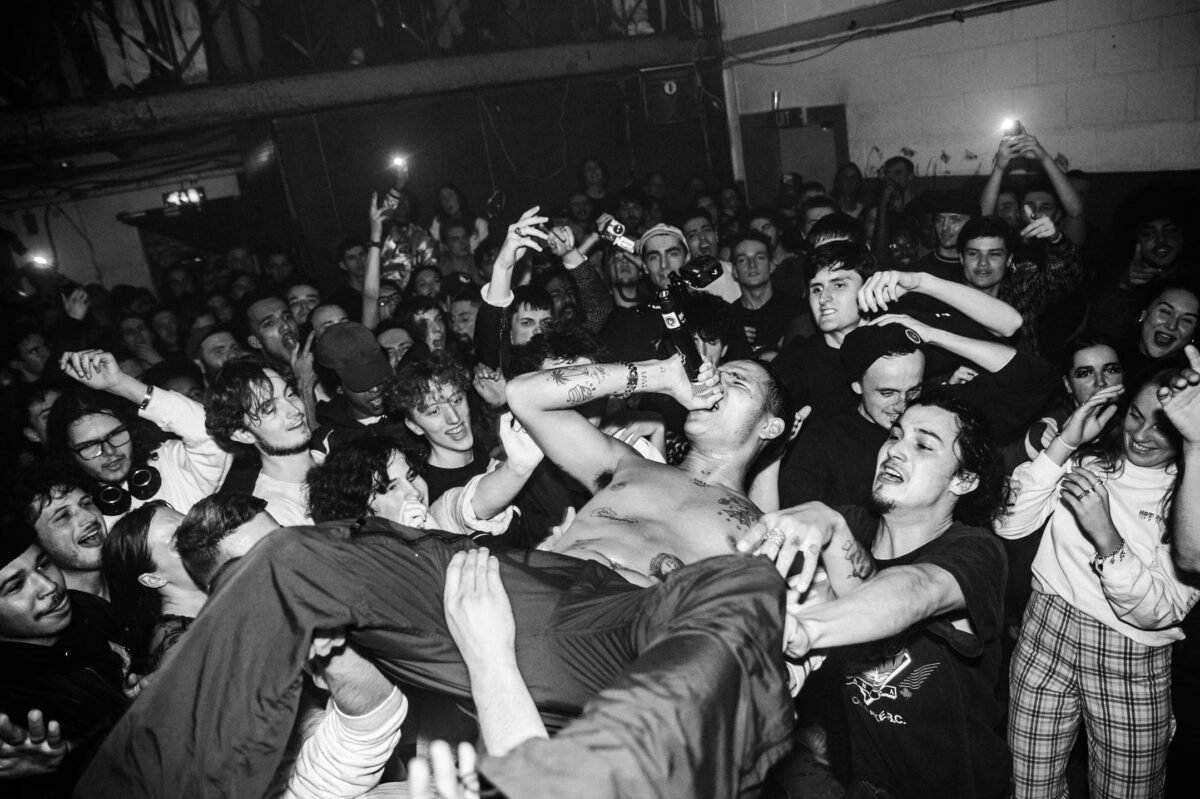
Garage Noord is compact and relatively raw. The low-key architecture keeps the audience close to the booth and reduces the separation between performer and visitor.
The club does not need enormous screens, complex scenography or a highly visible stage because its programme is not built around presenting DJs as performers in the festival sense. This is particularly compatible with the more experimental side of the programme. Music can develop gradually without requiring constant visual reinforcement or dramatic drops designed for a large audience.
Community
Garage Noord also places considerable emphasis on inclusivity and the social environment of the venue. Like many contemporary independent clubs, it explicitly rejects racism, sexism, homophobia, transphobia and other forms of discrimination and harassment.
The venue hosts different queer communities, experimental artists and collectives for whom the ability to create a relatively autonomous social space is an important part of club culture. Unlike a large venue where most visitors can remain anonymous within a crowd of thousands, Garage Noord often feels like a meeting point for overlapping parts of Amsterdam’s music scene.
Artists can be part of the audience before or after their sets. Radio hosts, promoters, producers and visitors occupy the same relatively small environment. The distinction between people producing the culture and people consuming it becomes less obvious.
Present
Today, Garage Noord remains at Gedempt Hamerkanaal 40 and continues to operate as one of the most adventurous small clubs in Amsterdam. Its programme still resists simple categorisation. Techno, house and electro coexist with bass music, experimental electronics, live performances and selectors whose sets can move far outside conventional club genres.
The venue has gained international recognition without fundamentally transforming itself into an international destination club.
Garage Noord’s importance comes partly from remaining connected to the city around it. It provides infrastructure for Amsterdam’s local scene while allowing that scene to interact naturally with artists arriving from elsewhere. Garage Noord demonstrates that an influential club does not necessarily need monumental architecture, enormous line-ups or thousands of visitors. Sometimes a garage, a sound system and the right community are enough.
