



Cam. Sotet 2 – Fraga, Spain
Florida 135 is one of the most important clubs in the history of Spanish electronic music. Located in Fraga, a small town in Aragón between Barcelona and Zaragoza, it developed far from the metropolitan centres normally associated with European nightlife. Yet for decades its dancefloor attracted many of the defining figures of techno and house, from Jeff Mills and Laurent Garnier to Richie Hawtin, Carl Cox and Sven Väth.
Its significance extends far beyond the club itself. Florida 135 belongs to the Arnau family, whose involvement in entertainment stretches across generations. The same family later created Monegros Desert Festival and, through a younger generation, developed elrow into an international party brand. Florida 135 is therefore the central link between a provincial Spanish dance hall and one of the country’s most influential electronic music organisations.
From Fraga to Florida
The history begins long before techno. The Arnau family’s involvement in hospitality and entertainment can be traced back to the nineteenth century, when the family operated a café in Fraga. Over successive generations, cafés, theatres, cinemas and dance halls became part of the family business, reflecting the changing forms of popular entertainment in Spain.
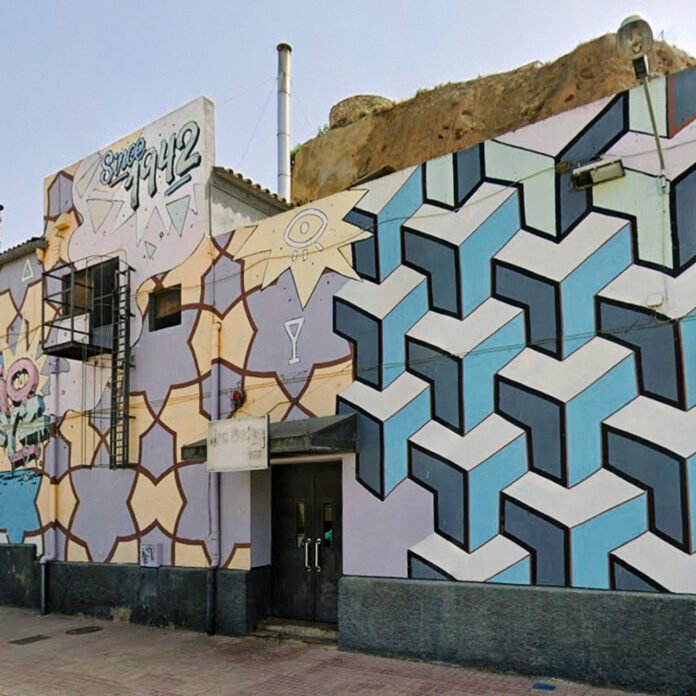
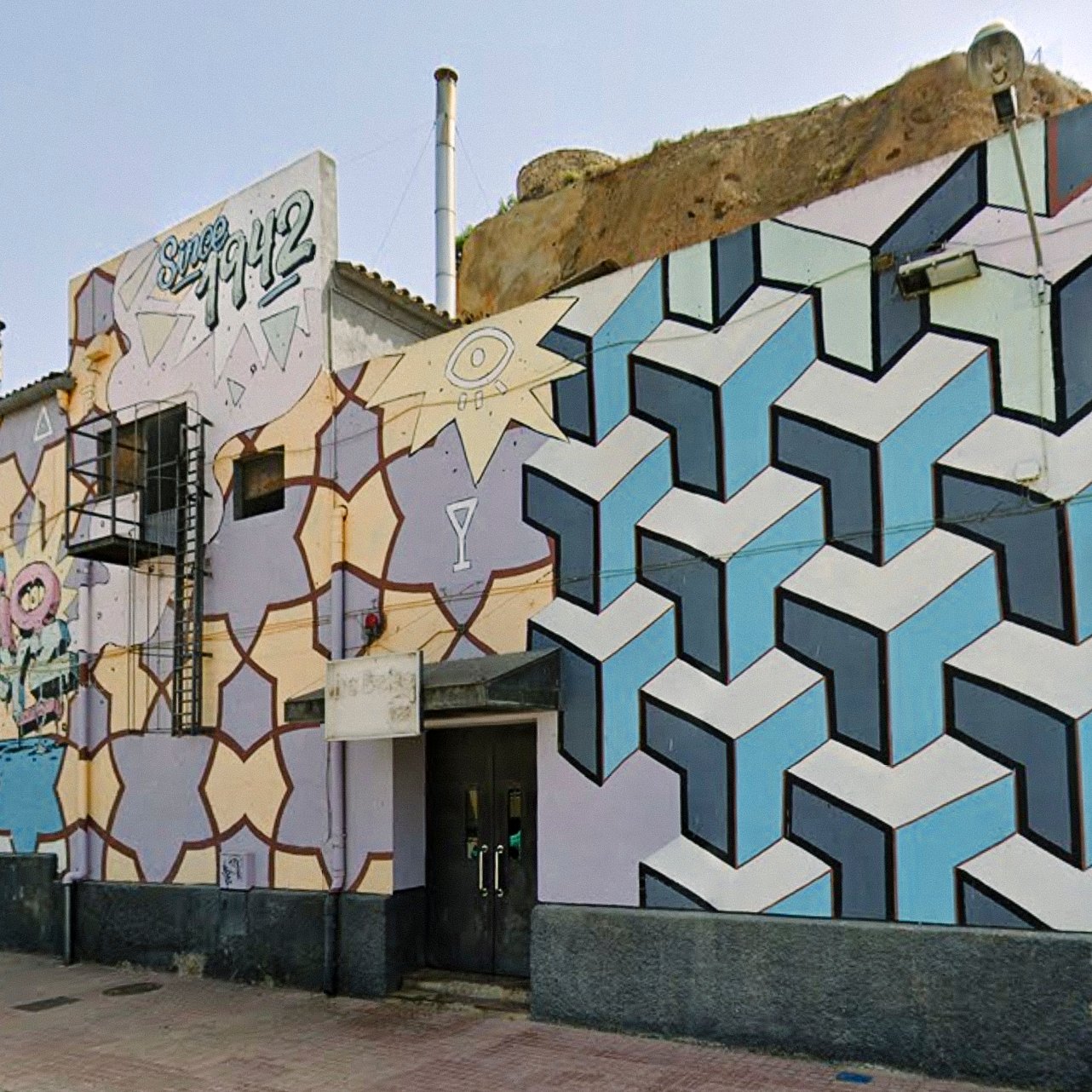
The direct history associated with Florida reaches back to 1942. Over the following decades, the venue evolved alongside Spanish nightlife rather than remaining tied to one generation of music. It passed through the era of traditional dance halls, orchestras and popular music before gradually absorbing disco and, eventually, electronic dance music.
This continuity is what makes Florida 135 unusual. Many clubs associated with the development of European techno emerged during the late 1980s or 1990s, often inside abandoned industrial buildings. Florida did not begin with rave culture. Electronic music arrived inside an existing family tradition of organising places where people gathered to dance.
The venue itself changed repeatedly. Different generations of the Arnau family rebuilt, renamed and reimagined the club as nightlife evolved. By the late twentieth century it had developed into the Florida 135 recognised today: a large, theatrical club whose architecture resembles a dense urban street rather than a conventional rectangular dance hall.
The Cathedral of Techno
Florida 135 eventually became known as the “Cathedral of Techno.” The description reflects both its musical reputation and the unusual intensity of a club operating in such an unexpected location.
Inside, balconies, staircases, elevated walkways, metal structures and illuminated façades surround the central dancefloor. The design creates the impression of entering an enclosed city at night. Instead of concealing the architecture in darkness, Florida uses it to frame the crowd vertically, with dancers visible on multiple levels around the room.
This theatrical approach predates the spectacular visual language later associated with elrow. The two projects look very different — Florida is darker and more industrial, while elrow became famous for colour, inflatables, performers and confetti — but both reflect the Arnau family’s understanding of nightlife as an environment rather than simply a room containing a DJ.
For Florida 135, however, music remained the dominant attraction. The club developed its international reputation through serious electronic programming rather than spectacle alone.
Techno Comes to Spain
Juan Arnau Sr. became particularly important during the transition towards electronic music. The Arnau family recognised the emerging rave and techno cultures developing elsewhere in Europe and began bringing international electronic artists to a Spanish audience that had relatively few opportunities to hear them.
During the 1990s and 2000s, Florida 135 established itself as one of Spain’s major techno destinations. Jeff Mills, Richie Hawtin, Laurent Garnier, Carl Cox, Sven Väth, Dave Clarke and numerous other international DJs appeared in Fraga, while Spanish artists developed alongside them.
The location made this achievement particularly remarkable. Fraga has a population of only around fifteen thousand people and sits far from the nightlife density of Barcelona, Madrid or Ibiza. Going to Florida therefore frequently involved travelling specifically for the club rather than incorporating it into a night out in a major city.
This helped produce a distinctive audience. Florida became a destination, drawing dancers from Aragón and Catalonia as well as visitors from elsewhere in Spain. Its geographical isolation strengthened the sense that a night there was an event in itself.
The club consequently played an important role in connecting Spain with the international techno circuit at a time when electronic music infrastructure in the country was still developing.
From Florida to the Desert
Florida 135 also provided the cultural foundation for another Arnau project: Monegros.
In the early 1990s, the family began organising a rave in the semi-desert landscape outside Fraga. What started as a relatively small gathering connected with the Florida community developed into Monegros Desert Festival, one of Europe’s largest and longest-running electronic music events.
The relationship between the two is fundamental. Monegros was not created by an external festival company searching for an unusual desert location. It grew from the club culture already established around Florida 135.
The festival gradually expanded from an underground gathering into an event attracting tens of thousands of people for marathon sessions lasting around twenty hours. Techno and house remained central, while the programme expanded into electro, drum & bass, hip-hop, hardcore and other forms of electronic music.
Artists associated with Florida naturally became part of Monegros, and the desert festival amplified the philosophy of the club on an enormous scale. The journey to Fraga became a journey further into the surrounding landscape, where the isolation that characterised Florida could be transformed into a temporary city devoted almost entirely to music.
The Arnau Family and elrow
The next major transformation came through Juan Arnau Jr. and Cruz Arnau, representing the younger generation of the family.
In 2010, the family opened Row 14 near Barcelona. Initially conceived as a club focused on underground house and techno, it hosted artists such as Laurent Garnier and Sven Väth. The project struggled commercially, however, forcing its organisers to reconsider the traditional model of simply booking internationally recognised DJs.
From this experimentation emerged elrow.
Instead of focusing exclusively on the artist, elrow placed the audience inside an elaborate theatrical environment. Actors, costumes, inflatables, props, confetti and increasingly complex themed production transformed the party into something closer to immersive theatre combined with clubbing.
The concept eventually expanded far beyond Spain, with residencies in Ibiza and events across Europe, Asia, the Americas and other international markets.
Despite the visual difference, the lineage is direct: generations of the Arnau family moved from cafés and dance halls to Florida 135, from Florida into the Monegros desert, and eventually from Spanish club culture into the global entertainment industry through elrow.
Florida is the bridge connecting all of them.
Architecture and Atmosphere
Florida 135’s interior remains one of the most recognisable aspects of the club. The central room is surrounded by several levels of balconies and architectural structures, creating numerous viewpoints onto the dancefloor.
This vertical arrangement produces a different relationship between crowd and DJ from the flat warehouse model common in techno. The dancefloor remains the centre of gravity, but people on surrounding levels become part of the visual environment. The audience observes itself as much as the performance.
The aesthetic combines industrial and theatrical elements without attempting to reproduce the rawness of an abandoned factory. Florida was designed as a nightclub. Its architecture is intentionally dramatic, drawing from the idea of an imaginary urban environment contained inside the building.
This distinction is important. Much European techno culture developed through adaptive reuse: factories, power stations and warehouses became clubs because those buildings were temporarily available. Florida represents another tradition in which nightlife architecture was deliberately constructed and repeatedly modified around dancing itself.
The result feels closer to a permanent temple of nightlife than a temporary occupation.
Music
Techno remains the genre most strongly associated with Florida 135, but its programme has historically extended across house, electro, minimal, acid, harder electronic music and other areas of club culture.
Its artist history reads like a condensed chronology of European techno. Jeff Mills brought the Detroit tradition; Laurent Garnier connected techno with a broader European club vocabulary; Richie Hawtin represented the development of minimal and technologically driven DJ performance; Sven Väth connected the club with German techno culture; and Spanish artists increasingly developed their own identities within the same ecosystem.
The relationship with Monegros widened this spectrum further. As the festival expanded, it incorporated drum & bass, hip-hop and other styles while maintaining techno as one of its central foundations.
Florida therefore became more than a room for international bookings. It helped establish an audience for underground electronic music in a part of Spain where such a scene might otherwise have seemed geographically improbable.
Outside the Major Cities
Florida 135 is particularly interesting within the history of European club culture because of where it exists.
The conventional narrative of electronic music is strongly metropolitan: Detroit, Chicago, New York, Manchester, London, Berlin, Amsterdam and later Barcelona became centres because large populations produced the audiences, artists and infrastructure necessary for scenes to develop.
Florida demonstrates another possibility. A sufficiently strong venue can create its own geography.
Fraga became relevant to electronic music because people were willing to travel there. The apparent disadvantage of isolation eventually became part of the identity. Like later destination clubs and festivals located outside major cities, Florida transformed the journey itself into part of the experience.
The emergence of Monegros reinforced this principle. Once tens of thousands of people were willing to travel into the desert outside Fraga for electronic music, the idea that Spanish club culture needed to remain concentrated in Barcelona, Madrid or Ibiza became considerably less convincing.
Present
Florida 135 has survived multiple generations of nightlife while many clubs created decades later have disappeared. Its longevity comes partly from the ability of the Arnau family to repeatedly adapt the format around changing audiences rather than attempting to preserve a single historical version of the venue.
Its wider cultural family has meanwhile become enormous. Monegros Desert Festival continues to bring tens of thousands of people into the landscape surrounding Fraga, while elrow has transformed an approach developed by the same family into an international entertainment brand.
This success can make Florida itself easy to overlook. Elrow is more globally visible and Monegros operates on a dramatically larger scale. Historically, however, neither makes complete sense without the club in Fraga.
Florida 135 represents a lineage rarely found in contemporary nightlife. Its story does not begin with a promoter discovering a warehouse in the 1990s. It stretches backwards through discos and dance halls into generations of a family organising entertainment in the same small Spanish town.
As music changed, the dancefloor changed with it.
By the time techno arrived, Florida already understood the fundamental principle that would later drive Monegros and elrow: people will travel extraordinary distances when the party itself becomes a destination.
