



Splaiul Unirii 160 – Bucharest, Romania
Club Guesthouse is one of the most influential underground electronic music clubs in Romania and a key institution in the development of the sound commonly known as Romanian minimal or “rominimal”. Founded in Bucharest in 2010, the club became closely associated with long DJ sets, afterhours culture, carefully tuned sound systems and a generation of Romanian artists whose approach to minimal house and techno eventually gained an international following.
Unlike clubs built around large-scale production or constantly changing headline bookings, Guesthouse developed its reputation through continuity. The same artists returned regularly, sets could last for many hours, and the dancefloor became a place where a particular musical language could evolve over time.
History and Location Changes
Traian 42 (2010–2013)
Guesthouse began in 2010 at Traian 42, in a relatively small space in central Bucharest.
The original venue was closer in scale to a house or private gathering space than a conventional large nightclub. The DJ booth and audience were physically close, creating an intimate environment in which selectors could react directly to the room.
This format proved particularly compatible with the emerging Romanian minimal scene. During the late 2000s and early 2010s, DJs including Rhadoo, Raresh and Petre Inspirescu — collectively known as RPR Soundsystem — had already developed an increasingly distinctive interpretation of minimal house and techno. Around them emerged another generation including Priku, Cezar, Dan Andrei, Barac, Arapu and many others.
Guesthouse provided this community with something essential: a regular home.
Rather than adapting their sets to short festival slots, DJs could play for four, six or eight hours, gradually moving through subtle changes in rhythm, texture and atmosphere. The relationship between these extended sets and the audience became one of the defining characteristics of Bucharest club culture.
Popa Nan 82 (2013–2020)
As Guesthouse’s reputation grew, the original room became too small. In November 2013, the club moved to Popa Nan 82, occupying part of a former textile factory.
The industrial location became the address most strongly associated with Guesthouse internationally.
The new venue provided a larger dancefloor while preserving the basic philosophy of the original club. Its design remained relatively minimal, while considerable attention was given to acoustics and sound. A Funktion-One system became central to the experience, providing the clarity required for music built around subtle percussion, low-frequency movement and small changes in texture.
Popa Nan became one of the principal laboratories of rominimal.
Resident and recurring Romanian DJs played alongside international artists, but Guesthouse rarely functioned according to a conventional hierarchy between local residents and foreign headliners. A Romanian artist playing an extended morning set could be as important to the night as an internationally established guest.
The timing of the parties was equally important. Guesthouse became famous for events extending deep into Sunday morning and sometimes considerably further. The transition from night into daylight became part of the experience rather than a signal that the event should end.
By the second half of the 2010s, the reputation of the venue had spread far beyond Romania. Visitors interested in minimal house increasingly travelled to Bucharest specifically for Guesthouse, while many of the artists associated with the club were simultaneously becoming regulars at clubs and festivals across Europe.
In 2019, however, it became clear that the building at Popa Nan would be demolished as part of redevelopment plans. Guesthouse prepared to leave the location.
The Covid-19 pandemic arrived before the club could properly complete its farewell. The venue closed and the building was eventually demolished, ending the period most closely associated with Guesthouse’s rise.
Splaiul Unirii / Timpuri Noi (2021–present)
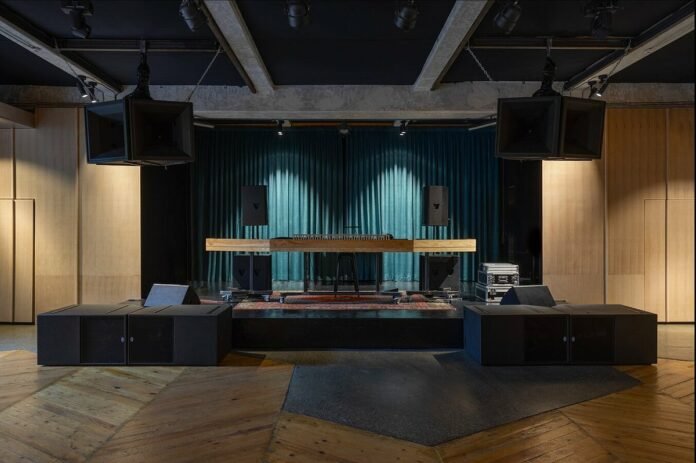
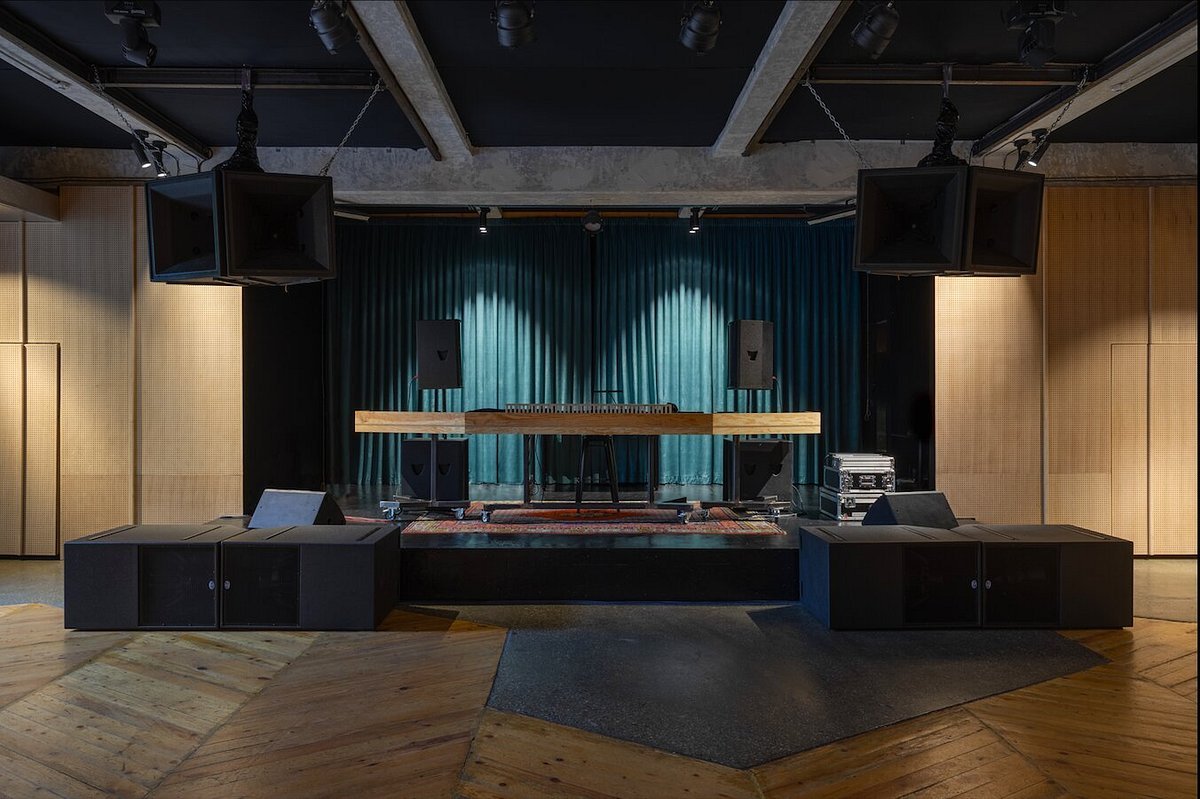
Guesthouse returned in 2021 in a new purpose-designed location at Splaiul Unirii 160, in the Timpuri Noi area of Bucharest.
Rather than simply reproducing the industrial aesthetic of Popa Nan, the new space introduced a different architectural language. Natural wood, carefully designed acoustic elements and a new Funktion-One installation reflected an increasingly sophisticated approach to sound.
The project also expanded beyond the traditional nightclub format through a listening-bar concept. This created a space where music could be experienced outside the intensity of the main weekend dancefloor, reinforcing Guesthouse’s broader interest in listening culture and sound-system design.
Despite the architectural change, the central philosophy remained familiar: long sets, carefully selected artists and an audience expected to engage seriously with the music.
Guesthouse and Rominimal
Understanding Guesthouse requires understanding the unusual development of Romanian electronic music.
During the 2000s, Romanian DJs absorbed influences from minimal techno, house and the European scenes surrounding artists such as Ricardo Villalobos. Gradually, these influences developed into a particularly subtle and hypnotic sound characterized by intricate percussion, restrained basslines, unusual rhythmic structures and extremely long transitions.
Rhadoo, Raresh and Petre Inspirescu became its most internationally recognised representatives. Their [a:rpia:r] label, founded in 2007, became one of the scene’s central institutions, while the Sunwaves festival on the Black Sea provided another environment in which extended sets could develop without conventional time restrictions.
Guesthouse performed a similar function on a weekly level.
The club was not simply a venue that booked rominimal DJs after the genre became popular. It was one of the physical environments in which the music itself developed. Producers could test unreleased records in front of an audience already familiar with the language of the scene, while DJs could experiment with pacing and selection over many hours.
This created a feedback loop between producers, DJs, sound system and dancefloor.
It also helps explain why Guesthouse became internationally influential despite being considerably smaller than many famous European clubs. Its importance came less from capacity than from concentration: a relatively small community of artists repeatedly playing for an unusually knowledgeable audience.
The Culture of Long Sets
Time is perhaps the most distinctive element of the Guesthouse experience.
A conventional club programme often divides a night between several DJs playing relatively short sets. Guesthouse became associated with the opposite approach. Four-hour sets are normal, while considerably longer sessions have formed part of the club’s history.
The musical consequences are significant.
Without the requirement to create immediate peaks, DJs can move gradually between moods and rhythms. Tracks can be allowed to play for longer, transitions become less obvious, and the distinction between individual records can slowly disappear into a continuous musical environment.
This philosophy also shaped Bucharest’s famous afterhours culture. The most important part of a Guesthouse night does not necessarily occur at 2 or 3 a.m. The dancefloor may still be developing at sunrise, with parties continuing through Sunday morning and sometimes into the afternoon.
Even major events continue to use this extended format. Guesthouse’s June 2026 season closing, for example, was programmed from Saturday afternoon until Sunday evening, combining a rooftop session with the main club and more than 24 hours of music.
Sound and Space
Sound has remained another fundamental part of Guesthouse throughout its different locations.
Rominimal depends heavily on detail. Much of the movement happens through small changes in percussion, spatial effects and bass rather than dramatic drops or obvious melodic structures. A poorly configured system can easily remove precisely the details that make the music interesting.
Guesthouse consequently developed a reputation for treating its sound system as part of the architecture of the club.
The current venue continues this approach with a Funktion-One installation and acoustically considered interior. The objective is not simply maximum volume but consistency and clarity throughout the room.
Photography is also restricted during club events. Like several other underground European venues, Guesthouse uses a no-photo policy to reduce distractions and preserve the privacy of the dancefloor.
Present
Today, Guesthouse remains active at Splaiul Unirii 160 and continues to combine the core Romanian scene with carefully selected international artists.
Rhadoo, Raresh, Petre Inspirescu, Priku, Cap, Gojnea76 and other artists connected with different generations of Romanian electronic music continue to appear alongside international selectors whose approach fits the club’s long-form philosophy.
In 2025, Guesthouse marked its 15th anniversary with If These Walls Could Talk, a short documentary examining the evolution of the club and featuring artists and people connected with its history.
The anniversary highlighted something relatively unusual in contemporary nightlife. Guesthouse survived not only changing musical trends but the physical destruction of the venue most closely associated with its identity.
Its importance therefore extends beyond being one of Bucharest’s best-known clubs.
Together with [a:rpia:r], Sunrise and Sunwaves, Guesthouse became part of the infrastructure that allowed a relatively small Romanian electronic music community to develop an internationally recognisable sound. Artists, records, festivals and a specific style of clubbing reinforced one another until “Romanian minimal” became a reference point far beyond Romania.
Fifteen years after opening, Guesthouse remains perhaps the clearest physical expression of that culture: a club where sound matters more than spectacle, the morning can be more important than midnight, and a DJ may need six hours rather than sixty minutes to tell the whole story.
