



Weteringschans 6-8 – Amsterdam, Netherlands
Paradiso is one of Amsterdam’s most important music venues and one of the most recognisable cultural institutions in the Netherlands. Located close to Leidseplein in a former nineteenth-century church, it has operated as a music and cultural centre since 1968 and has played a major role in the development of Amsterdam’s counterculture, rock, punk, electronic music and contemporary nightlife.
Unlike a conventional nightclub, Paradiso has never belonged to a single musical scene. Concerts, club nights, experimental performances and cultural events have existed alongside one another for more than half a century. Its programme has ranged from some of the world’s biggest rock and pop artists to underground techno, house and experimental electronic music.
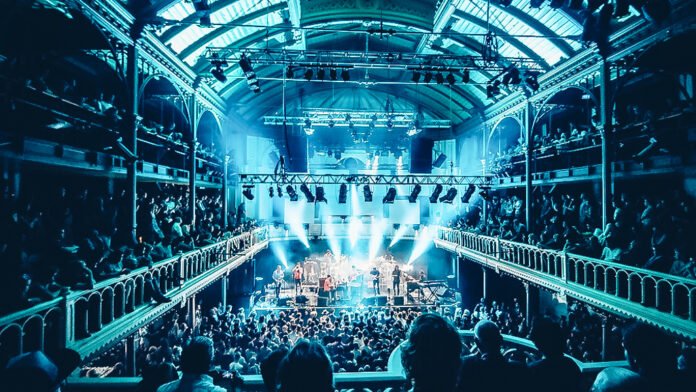
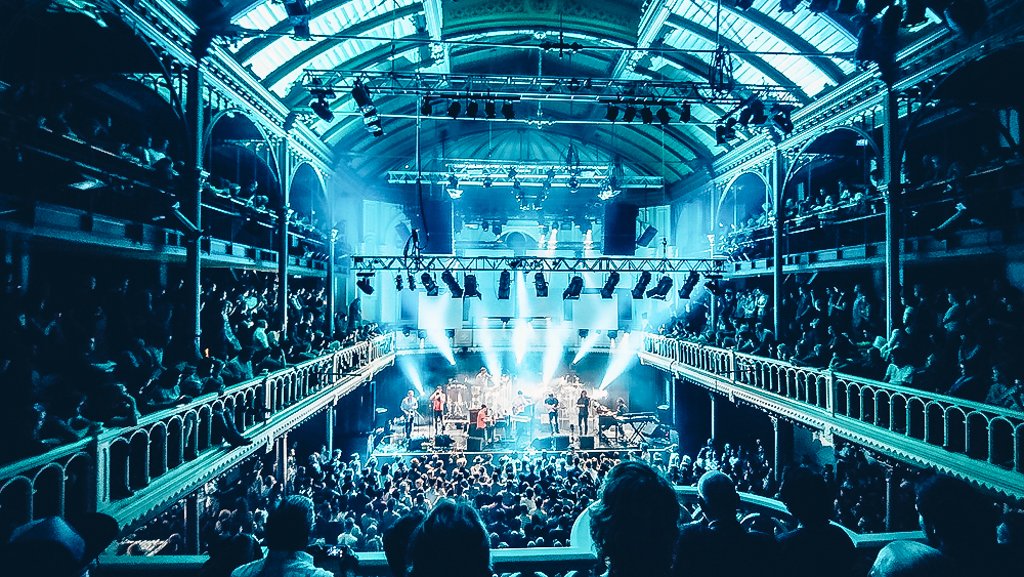
The building itself is fundamental to the experience. A high vaulted ceiling, balconies and large stained-glass windows surround the main dancefloor, creating one of the most distinctive music spaces in Europe.
From Church to Counterculture
The building at Weteringschans 6–8 was constructed between 1879 and 1880 for the Vrije Gemeente — the Free Congregation — a liberal religious community founded in Amsterdam during the nineteenth century.
Designed in a neo-Romanesque style, the church included a large central hall surrounded by balconies. These architectural features would later prove remarkably suitable for a completely different form of collective experience.
The congregation eventually moved elsewhere, leaving the building without its original religious function.
Its transformation began during the cultural upheaval of the 1960s.
Amsterdam had become one of the European centres of youth counterculture. The Provo movement, anti-establishment politics, experimental art, psychedelic culture and changing attitudes towards sexuality and drugs were reshaping the city.
Young Amsterdam residents increasingly demanded places where this emerging culture could develop independently from traditional institutions.
In 1967, a group of young people occupied the former church. The action became part of a wider campaign for an autonomous youth centre in Amsterdam.
The occupation itself was short-lived, but the idea survived.
The city eventually agreed to allow the building to become a cultural space, and on March 30, 1968, it officially opened as Cosmisch Ontspanningscentrum Paradiso — the Cosmic Relaxation Centre Paradiso.
The former church had become a temple of counterculture.
The 1960s and 1970s
Early Paradiso was very different from the professional concert venue that exists today.
It functioned as an experimental meeting place where music was only one part of a wider cultural programme. Theatre, film, political discussion, visual art and alternative lifestyles existed alongside psychedelic concerts and improvised performances.
The atmosphere reflected Amsterdam’s rapidly changing social environment.
Paradiso became associated with hippies, artists, activists and travellers passing through the city. The building offered a relatively autonomous environment where conventional distinctions between audience, performer and cultural institution could be challenged.
During the 1970s, music gradually became more central to its identity.
Rock, progressive music, reggae and other emerging styles appeared regularly, while Paradiso increasingly developed the infrastructure of a professional venue without completely abandoning its countercultural origins.
Then punk arrived.
The late 1970s brought artists such as the Sex Pistols and other figures from the emerging punk and new-wave movements to Paradiso. The venue became an important Dutch platform for music that often had difficulty entering conventional concert halls.
This ability to move from one cultural movement to another would become one of Paradiso’s defining characteristics.
An International Music Institution
During the 1980s and 1990s, Paradiso developed into an internationally recognised concert venue.
Artists who would become some of the biggest names in popular music frequently appeared there in comparatively intimate conditions. Prince, David Bowie, Nirvana, U2, The Rolling Stones, Amy Winehouse and many others have performed within its former church walls.
The capacity of the main hall — roughly 1,500 people — created an unusual position within the international touring circuit.
Paradiso was large enough to host significant artists but small enough for performances to remain intimate. For musicians capable of filling arenas, a Paradiso appearance could therefore become a special event rather than simply another tour date.
Its architecture reinforced this character.
The original church balconies wrap around the main hall, while the high ceiling and stained-glass windows remain visible above the stage and audience. Despite decades of technical upgrades, the building has never lost the spatial identity of its original purpose.
The result is a venue where the architecture constantly reminds visitors that the room existed long before amplified music.
Electronic Music and Club Culture
Electronic music gradually became another important part of Paradiso’s programme.
Amsterdam developed a particularly strong club and rave culture during the late 1980s and 1990s, influenced by acid house, techno and the international expansion of house music. Paradiso became one of the places where these new sounds intersected with the city’s existing alternative culture.
Its role differs from dedicated Amsterdam clubs such as Trouw, De School or Shelter.
Paradiso does not attempt to maintain a single continuous club identity. Instead, the building acts as infrastructure for different promoters, festivals, collectives and musical communities.
House, techno, disco, electro, drum & bass and experimental electronic music have all occupied the venue at different times.
One of its most important long-running club institutions is Rush Hour and the wider Amsterdam ecosystem of DJs, labels and promoters that has repeatedly used Paradiso for larger events. During Amsterdam Dance Event, the venue becomes particularly active, hosting label showcases, live electronic performances and club programmes that can continue deep into the night.
Paradiso has also maintained a strong relationship with queer nightlife.
The long-running Rapido parties became internationally known for large-scale gay club events inside the former church, transforming the main hall into a very different type of dancefloor while continuing Paradiso’s tradition of providing space for communities outside mainstream nightlife.
This flexibility is central to the venue.
On one evening, the room may contain a seated or standing concert audience. Hours later or on the following night, the same architecture can become a full-scale electronic dancefloor.
The Building
Few European music venues are as closely identified with their architecture as Paradiso.
The main hall retains the proportions of the original church. The stage occupies one end of the former sanctuary, while balconies surround the audience on multiple sides.
Above the dancefloor, tall stained-glass windows create an environment completely different from the dark industrial architecture associated with most contemporary techno clubs.
During daytime events, natural light can enter the room. At night, lighting transforms the same windows into part of the visual environment.
Paradiso also contains a smaller upstairs room, traditionally known as the Kleine Zaal, which provides a much more intimate setting for emerging artists, experimental performances and smaller events.
Over time, Paradiso expanded its activities beyond the original building. The organisation now presents concerts and events at numerous locations across Amsterdam under the name Paradiso Programma, allowing it to programme artists whose audience or technical requirements do not fit the historic church.
The institution has therefore become considerably larger than the building from which it takes its name.
Paradiso and Amsterdam
Paradiso’s location places it within one of Amsterdam’s historic entertainment districts.
Leidseplein sits immediately nearby, surrounded by theatres, cinemas, bars and music venues. Melkweg — another institution that emerged from Amsterdam’s 1960s and 1970s counterculture — is only a short distance away.
Together, Paradiso and Melkweg helped establish a model of cultural space particularly characteristic of Amsterdam.
Neither began as a conventional commercial concert hall. Both emerged from the social movements and alternative culture of the period and gradually became professional institutions without completely abandoning their multidisciplinary character.
This history distinguishes Amsterdam from cities where club and concert infrastructure developed primarily through commercial entertainment companies.
Paradiso exists partly because a generation of young people demanded cultural space and temporarily occupied an abandoned building.
More than half a century later, the result has become part of the city’s official cultural infrastructure.
More Than a Club
Paradiso continues to host much more than music.
Debates, literary programmes, cultural discussions, film, performance and interdisciplinary projects remain part of its activities. This reflects the original idea of the Cosmic Relaxation Centre more closely than its international reputation as a concert venue might suggest.
The organisation also plays an important role in developing emerging artists.
Smaller shows can take place upstairs or at partner locations before musicians eventually move into the main hall. Paradiso therefore functions simultaneously as a major international venue and part of the local music infrastructure of Amsterdam.
This mixture of scales is unusual.
A relatively unknown Dutch artist and an internationally famous musician can effectively belong to the same programme, while underground club nights coexist with mainstream concerts.
Present
Today, Paradiso remains at its original Weteringschans location, more than half a century after the former church was occupied by Amsterdam’s counterculture.
Its programme is extraordinarily dense, often containing several events on the same day across the main hall, smaller rooms and external venues. Rock, hip-hop, jazz, electronic music, experimental performances and club nights all continue to coexist.
For electronic music specifically, Paradiso remains less of a genre-defined club than a major piece of infrastructure within Amsterdam’s nightlife.
That distinction is important.
De School represented a self-contained club culture built around a particular building and community. Shelter operates around the idea of a dedicated underground dancefloor. Paradiso instead provides a historic cultural platform capable of absorbing successive musical movements without becoming permanently defined by any of them.
Its longevity is remarkable in a city where many influential clubs have existed only temporarily.
Paradiso survived punk, new wave, house, techno and multiple generations of Amsterdam nightlife while remaining inside the same nineteenth-century building.
The transformation is difficult to separate from the history of Amsterdam itself: a liberal church became an abandoned building, the abandoned building was occupied by young countercultural activists, and the resulting youth centre eventually became one of Europe’s most respected music venues.
More than fifty years later, people are still gathering beneath the same stained-glass windows — only the rituals have changed.
