



Schleusenufer 3 – Berlin, Germany
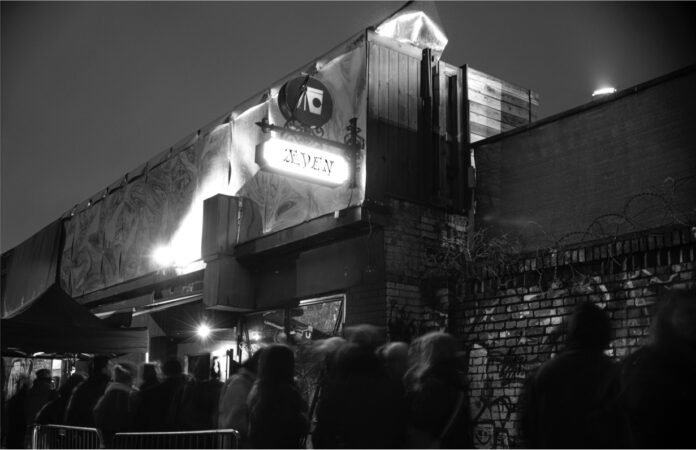
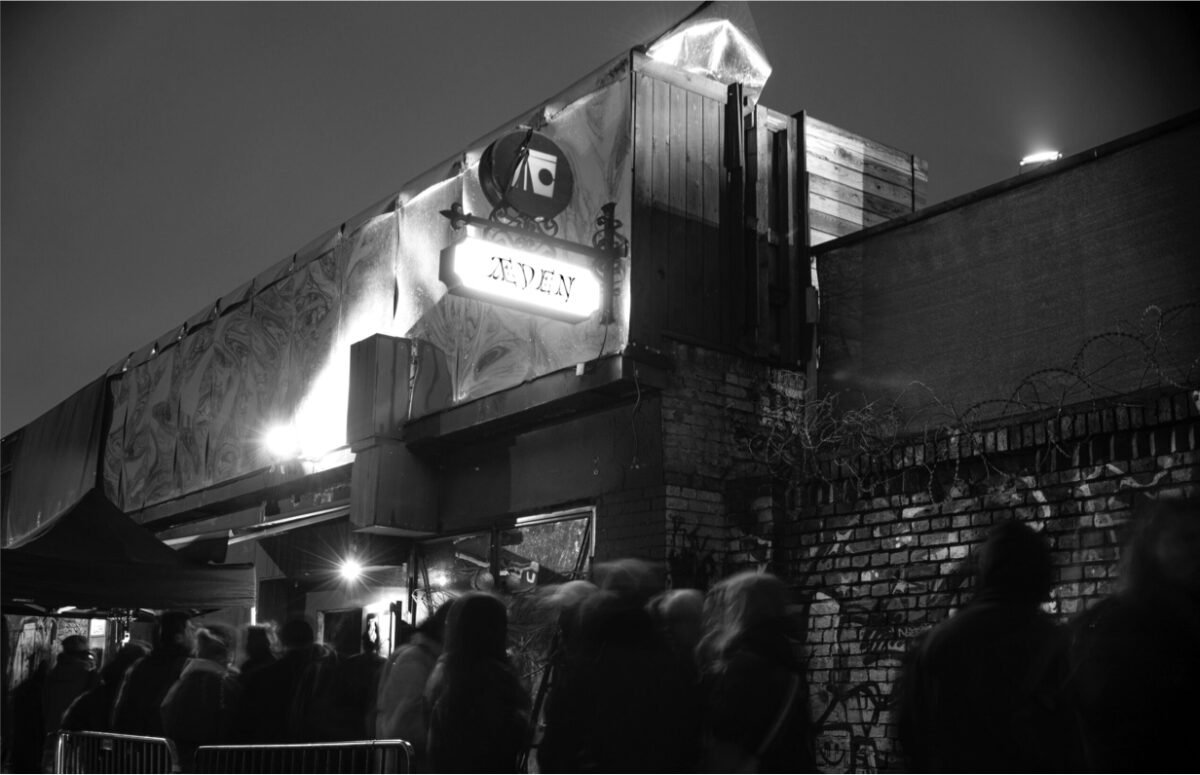
Æden is a club and cultural space located on Lohmühleninsel, a narrow island between the Landwehr Canal and the Spree on the border of Kreuzberg and Treptow. Hidden behind brick walls and trees at Schleusenufer, the venue combines indoor dancefloors with a large garden, creating an environment that feels considerably different from the monumental industrial architecture usually associated with Berlin techno.
Opened in 2021, Æden belongs to a younger generation of Berlin clubs but occupies a location with a much longer nightlife history. The site has passed through several club projects and retains traces of its previous incarnations, while Æden has expanded the concept beyond conventional weekend clubbing. Electronic music remains central, but live performances, exhibitions, installations and other cultural events form part of the programme as well.
Lohmühleninsel
The location is fundamental to Æden’s character. Lohmühleninsel sits at the eastern edge of Kreuzberg, surrounded by waterways and close to Schlesisches Tor, the Arena complex, Badeschiff and Club der Visionäre. The area forms part of a wider corridor of Berlin nightlife that developed around the Spree and the former industrial infrastructure of Kreuzberg and Treptow.
Unlike the enormous power stations, factories and warehouses that became synonymous with Berlin’s post-reunification club culture, the site at Schleusenufer feels comparatively intimate. Old brick walls enclose a garden filled with mature trees, vegetation and traces of earlier structures. During summer, the outdoor environment becomes as important as the indoor club itself, allowing parties to move between enclosed dancefloors and open air.
This combination of nature and nightlife has a particularly strong tradition in Berlin. Clubs such as Bar25, Kater Holzig, Club der Visionäre and Sisyphos demonstrated how gardens, improvised architecture and outdoor spaces could become fundamental parts of the club experience rather than simply smoking areas attached to an indoor room. Æden belongs to this side of Berlin club culture.
Before Æden
The history of the location predates the current club. The wider Schleusenufer site has previously been associated with venues including Chalet and Burg Schnabel, making Æden part of an existing nightlife geography rather than a completely new arrival.
Chalet was one of the characteristic clubs of early-2010s Berlin. Created partly by people connected with the Bar25 environment, it occupied a nineteenth-century brick building nearby and became known for its garden, intimate rooms and parties that could continue well beyond sunrise. Its atmosphere was considerably more playful and domestic than the monumental spaces associated with clubs such as Berghain.
Burg Schnabel subsequently operated on part of the site that would later become Æden. The garden and surrounding structures therefore already had a history as spaces for electronic music before the current project began. Elements of the previous landscape remain visible, including traces of the former garden pond.
Æden inherited this environment and developed it in a different direction. Rather than simply reopening an existing club under another name, the new organisation placed greater emphasis on combining nightlife with live music, contemporary art and interdisciplinary cultural programming.
Opening During the Pandemic
Æden officially opened on 12 June 2021, an unusual moment to launch a nightclub. Berlin was still operating under Covid-era restrictions and conventional indoor clubbing had not fully returned. The project consequently began primarily as an open-air venue, making extensive use of its garden while dancing restrictions remained in place.
The original capacity was approximately 350 people. Early programmes already indicated the musical and cultural direction of the venue, with artists such as Juliana Huxtable, Mehmet Aslan and Session Victim appearing around the opening period. Instead of waiting for conventional nightlife to return, Æden initially operated as a garden, bar, exhibition space and music venue.
The circumstances influenced its early identity. Live music and daytime events were particularly important, while the garden provided a way of maintaining collective music culture during a period when enclosed dancefloors were heavily restricted. One early collaboration with Berlin label Toy Tonics, Kryptox Sessions, combined live bands with DJs playing jazz, Afro-influenced music, disco, new wave, funk and other sounds outside the conventional techno spectrum.
As restrictions disappeared, the club gradually developed its indoor programme and became a more conventional part of Berlin nightlife without abandoning the interdisciplinary approach established during its opening period.
The Garden
The garden remains the most distinctive element of Æden. Enclosed by old brickwork and vegetation, it creates an unusual sense of separation from the surrounding city despite being only a short distance from some of Kreuzberg’s busiest streets. Trees extend above walls covered with ivy and graffiti, while bamboo, wooden structures and informal seating create a landscape closer to a hidden courtyard than a conventional nightclub terrace.
Today the garden covers around 400 square metres and can accommodate roughly 400 standing visitors. It can operate independently for outdoor events or become part of larger nights connecting the different areas of the Æden complex. Art is integrated into the space through the Gællery Garden, where rotating exhibitions and installations appear alongside club programming.
The outdoor environment changes the rhythm of longer parties. Instead of choosing between remaining on a dancefloor or leaving the venue entirely, visitors can move between intense indoor rooms and a much less controlled exterior environment. During summer events, daylight gradually transforms the space, creating the sunrise atmosphere that has long been an important part of Berlin’s open-air club culture.
This spatial diversity also makes Æden particularly suitable for extended multi-room events. The garden functions as connective tissue between dancefloors rather than simply as an additional stage, allowing the intensity of the night to rise and fall as people move through the site.
Music
Æden does not maintain a single genre identity. House and techno are central to much of its weekend programme, but the calendar extends considerably further into disco, experimental electronics, live music and sounds connected with different international and queer communities.
This breadth was visible from the beginning. Early events combined techno with jazz, Afrobeat, psychedelic music, disco and live performance, while subsequent programmes have included both established touring DJs and smaller Berlin collectives. Rather than imposing a single musical direction on every night, Æden frequently gives promoters and communities substantial control over individual events.
The current programme continues this approach. One night can be dedicated to raw or hypnotic techno across multiple rooms, another to house, while queer parties bring reggaeton, guaracha and Latin club sounds into the same complex. This makes Æden less predictable than a venue built around a specific interpretation of techno.
Its identity comes instead from the environment and the type of events it accommodates. The combination of indoor floors, outdoor space and relatively flexible programming allows different communities to temporarily reshape the club around their own musical culture.
Queer and Community-Led Club Culture
Queer events form an important part of Æden’s programme. The club regularly works with promoters whose parties are explicitly created around LGBTQ+ communities, and its wider approach emphasises respectful behaviour rather than a formal fashion-based dress code.
This places Æden within a broader development in Berlin nightlife. Although queer culture has always been fundamental to electronic music, a newer generation of promoters increasingly makes safer-space policies, awareness teams and consent explicit parts of event organisation. At Æden, individual promoters can implement particularly strict policies concerning discrimination, harassment and photography.
The club’s flexible identity is useful in this context. Instead of requiring every promoter to conform to a dominant house style, individual communities can establish their own musical and social rules for a night. The venue becomes infrastructure rather than the sole author of the experience.
That model has helped Æden accommodate parties ranging from relatively relaxed house and disco sessions to harder techno events and explicitly queer programmes. The common element is less a particular sound than an emphasis on the social environment surrounding it.
Art and Interdisciplinary Programming
From its opening, Æden positioned itself as more than a nightclub. Exhibitions, installations, workshops and live performances have existed alongside DJ-led events, while the garden provides a particularly natural setting for visual projects.
This interdisciplinary approach is not unusual in Berlin, where the boundaries between club, gallery, performance venue and temporary cultural space have historically been porous. What distinguishes Æden is the extent to which this activity is integrated into a relatively small club environment rather than a large cultural institution.
The Gællery Garden makes this relationship particularly visible. Artworks and installations can remain present between events, changing the environment without requiring the space to stop functioning as a club. The venue consequently accumulates visual interventions alongside the physical traces of its previous nightlife history.
The wider complex has continued to develop as well, with different indoor and outdoor spaces allowing the organisation behind Æden to host cultural and private events beyond its regular club programme.
A Different Side of Berlin
Æden occupies an interesting position within Berlin’s contemporary club landscape. It lacks the monumental architecture and singular musical identity of Berghain, the historical significance of Tresor or the sprawling scale of Sisyphos. Its character is closer to the tradition represented by places such as Bar25, Chalet and Club der Visionäre, where outdoor environments and informal architecture become as important as the dancefloor itself.
Its relatively central location also matters. Many Berlin clubs have been pushed progressively towards peripheral industrial districts as redevelopment has transformed former nightlife territories. Æden remains embedded within Kreuzberg’s established club geography, close to the Spree and the network of cultural spaces surrounding Schlesisches Tor.
At the same time, the neighbourhood around it has changed dramatically. The banks of the Spree have become increasingly valuable, and many of the informal or temporary spaces that once defined the area have disappeared. The survival of a garden-based club in this environment represents a continuation of a type of Berlin nightlife that has become increasingly difficult to maintain.
Æden does not attempt to recreate the Berlin of the 2000s, but the spatial logic remains recognisable: reuse an unusual piece of the city, allow vegetation and improvised architecture to coexist with electronic music, and create enough separation from everyday urban life for the environment to develop its own rhythm.
Present
Today, Æden continues to operate at Schleusenufer 3 with a programme spanning techno, house and other forms of electronic and club music. Two indoor floors are complemented by the outdoor garden, while exhibitions and cultural projects remain part of the wider identity of the space.
The venue is particularly active during the warmer months, when the garden changes the experience completely. Indoor dancefloors can provide the intensity expected from Berlin clubbing, while the outdoor areas allow the night to expand into something more social and less linear. A party can move from darkness into daylight without requiring everyone to remain inside the same room.
Within Berlin’s enormous nightlife ecosystem, Æden is not defined by being the largest, hardest or most historically important club. Its value comes from preserving another strand of the city’s club culture: smaller-scale, open-air, interdisciplinary and relatively fluid between music, art and social space.
The history of the location reinforces that continuity. Chalet and Burg Schnabel established parts of the site as nightlife territory before Æden arrived; the current project has inherited that landscape and adapted it to a newer generation of Berlin club culture.
In a city increasingly defined by pressure on cultural space, Æden demonstrates how a club can evolve through what already exists. Brick walls, old trees, remnants of previous venues, indoor rooms and a garden beside the water form a place that feels less like a purpose-built entertainment facility than another temporary layer in the constantly changing geography of Berlin nightlife.
