



How to build a solid, cohesive, and consistent label brand these days, but also how to keep and develop it? Mutual Rytm leads the way in this category – the label started in 2022 and today it represents a major voice in the modern sound of techno. It successfully releases music by artists such as Yanamaste, Phil Berg, Lars Huismann, Chlär, Mathys Lenne, Sciahri, and Chontane among others; and beyond the music itself, it strongly emphasizes quality, character, and staying connected with its audience.
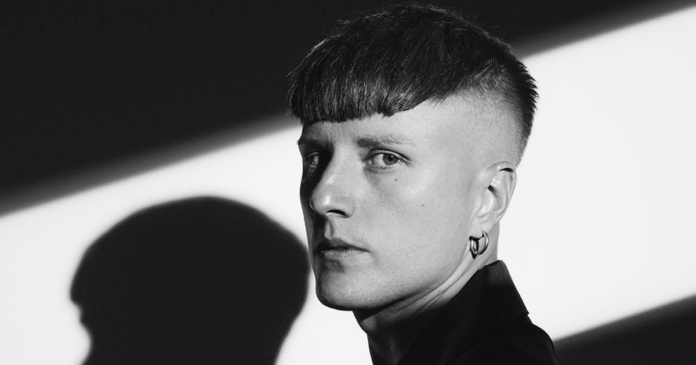
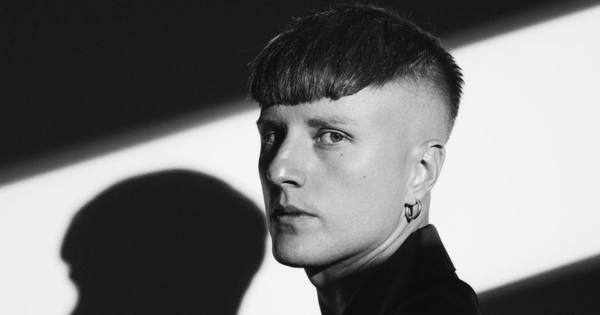
“Building an artist and building a label are both long-term processes,” admits SHDW—the label’s founder and director, producer, and DJ. On the occasion of Mutual Rytm’s first upcoming showcase in Poland – which will take place on October 31st at Warsaw’s Progresja – we asked him a few questions about how big dreams become reality, about the authenticity and freshness of music in the age of algorithms and views, and about the future of techno from today’s perspective.
Agata Omelańska: Hey Marco, welcome to Underton! The powerful set from EXPO XXI, your last visit in Warsaw, was named as one of the top performances of 2025. Today we’re meeting for another special occasion – the Mutual Rytm showcase, that will take place on 31st October 2026. I can confirm that the Polish audience is definitely ready, and how do you feel about the upcoming event?
SHDW: The response to that EXPO XXI set has honestly been overwhelming. Even a year later, I still get messages from people telling me what that night and the set meant to them. I never expected it to connect with people on that level, and that really means a lot to me.
So coming back to Warsaw for the first Mutual Rytm showcase in Poland makes it even more exciting. It will be my first time back since that night, and I’m really looking forward to experiencing that energy again. It’s definitely one of the shows I’ve been looking forward to the most this year.
Mutual Rytm would be our main topic for today, but we’ll be back to your visions and ideas in a moment! The label started in 2022 and has gradually been building its identity, core sound and strong community around it. In 2026 it’s considered one of the most important techno labels in the world. What shaped the sound of Mutual Rytm? And, branding-wise, how to build (and maintain) a strong brand as a techno label?
The sound of Mutual Rytm developed quite naturally from the music I’ve always been passionate about and the artists I wanted to work with. From the beginning, I never wanted to build the label around one strict formula. For me, the common thread is quality, character and emotion.
A big part of the identity comes through the curation. Every release should add something to the bigger picture while still bringing its own personality. I want the catalogue to feel like a journey, not like the same record being released over and over again.
With the branding, I believe consistency and authenticity are key. You can’t really force an identity. It grows from having a clear vision and being consistent with it over many years. For us, that means putting the music first, caring about every detail and building a genuine relationship with the artists and community around the label.
We’ve never wanted to chase whatever happens to be popular at the moment. If you stay true to your own vision, people eventually recognise that.
It’s important to underline the importance of Mutual Rytm’s sublabels: Raw, Spectra, Versus and X. What a great example of keeping the consistency of the label, but being open to music beyond the main focus at the same time!
The sublabels give us the freedom to explore different sides of the Mutual Rytm world. Raw, Spectra, Versus and X each have their own character, but they’re still connected to the same philosophy and level of curation.
That flexibility is important to me because I never want the label to become predictable. At the same time, I don’t see the sublabels as completely separate projects. They’re different chapters of the same story, giving certain artists and sounds a space where they can really develop.
From a label’s owner perspective: what makes a track unforgettable? And – nowadays – what’s the real meaning of success for a producer?
For me, an unforgettable track is one that creates a feeling you can’t quite explain. It doesn’t have to be the most complicated production or the biggest club track. Sometimes it’s one melody, groove, texture or atmosphere that stays with you long after the track is finished.
Originality is also important. There is so much music being released today that making something technically good isn’t necessarily enough. I’m looking for something that feels personal and immediately has its own character.
I think success has also changed. Numbers, streams and bookings are obviously part of the industry, but they don’t tell the whole story. For me, real success is making music you believe in, seeing it connect with people and still being proud of it years later. Longevity means much more to me than a moment of attention.
You released music by artists such as KiNK, Sciahri, Chontane, Human Safari, Mathys Lenne, Yanamaste, Dextro, Lars Huismann and Chlär, just to name a few. What did it teach you about leadership?
It taught me that leadership is mostly about listening, trust and knowing when to give people space. Every artist is different, so there’s no single way of working with everyone.
I want Mutual Rytm to have a clear identity, but I never want artists to feel like they have to change who they are to fit into it. I work with people because I believe in their music, and that individuality should remain part of the label.
It has also taught me patience. Building an artist and building a label are both long-term processes. Sometimes the best decision isn’t the one that gives you the quickest result, but the one that makes sense years down the line.
Recently the label took a big step further – I was really impressed and proud of you, when the very first edition of Mutual Rytm Festival took place! You chose Junkyard Club in Dortmund as the venue and invited artists such as ANNĒ, Ben Klock, Colin Benders, Ignez, Phil Berg, Temudo or Alarico among others. What was the most exciting and interesting part of this new project? And how did you move on from „planning” into „doing”?
The most exciting part was seeing something we had talked about for a long time finally become real. We’ve been building Mutual Rytm for years, so bringing the artists and community together in one place felt like a natural next step.
The collaboration with ANTEA was a big part of that. We had already worked together in Dortmund and quickly realised that we share a similar approach to music, events and community. So creating the festival together felt very natural, and JunkYard gave us the perfect environment for it.
Moving from planning into reality was probably the hardest part. With something that big, there are endless things you can discuss, but eventually you have to commit and start building. Once we did, everything moved very quickly.
Seeing the venue filled with our community and artists from so many different parts of the Mutual Rytm world was incredibly rewarding. It felt like the label had suddenly become something much bigger than the records themselves.
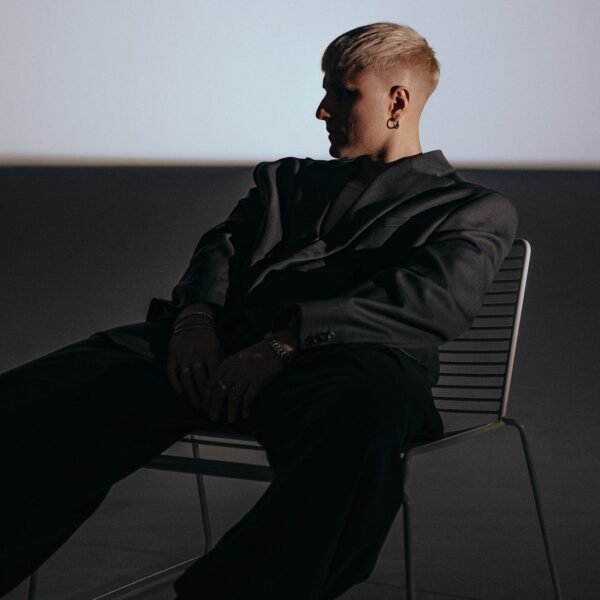
The discussion about Mutual Rytm would be incomplete without merch! You mentioned that you’ve studied Fashion Design and this experience helped you to create the label’s apparel. What is more, the merch became the tool of connecting people, eg. at the club or festivals, when ravers got to know each other by the eye-catching and distinctive design of your clothes. That’s so inspiring!
Fashion has always been part of my life, so creating the visual side of Mutual Rytm through clothing came quite naturally. My studies gave me a foundation, but the approach is really the same as with the music: quality, attention to detail and a strong identity.
What I love most is seeing people recognise each other through the clothes at clubs and festivals. The merch has become another way for people to connect with the label and with each other. When someone comes up to me because they recognise the Mutual Rytm shirt they’re wearing, that means much more to me than simply selling a piece of clothing.
In that sense, the merch has become part of the community and another expression of what Mutual Rytm represents.
Speaking of style: who is your favorite fashion designer and why? Was there any particular creator that inspired you to start or influenced your taste?
I don’t really have one favourite designer. I’m more inspired by certain brands, concepts and ways of thinking. But I’ve always liked Demna’s approach to fashion. He questions what fashion is supposed to be, plays with expectations and isn’t afraid to make people uncomfortable.
That mindset speaks to me. I’m much more interested in people who challenge the rules and make you look at things differently than those who simply follow what is considered beautiful or fashionable.
Okay, let’s come back to music and its origins. I cannot omit the deep love you have for Stuttgart – your hometown and the headquarters of Mutual Rytm. What’s the best thing about this city? And what has the local scene given you before you entered the biggest stages of the techno world?
What I love about Stuttgart is that it never tries too hard to be something it isn’t. It’s a smaller city, but it has always had a strong underground culture, and that gave me the space to develop without too much outside pressure.
The local scene taught me the basics: playing small clubs, reading a dancefloor, building relationships, making mistakes and slowly finding my own sound. Before the international stages, there were many years of playing locally and learning through experience.
A lot of what Mutual Rytm represents today comes from that environment. Stuttgart gave me the foundation, and I’m still very proud that everything grew from here.
What surprised you most in your journey as an artist? And what was, so far, the biggest challenge you had to face?
Probably how far this journey has taken me. I always had big dreams, but I never thought I’d actually experience so many of the things I once dreamed about. This year also marks 10 years of touring, which is pretty crazy to look back on.
At the same time, growth brings new challenges. One of the biggest has been learning to keep everything moving at once: being an artist, running a label, organising events and managing everything behind the scenes. It can be a lot to handle.
The industry has also changed massively, especially with social media.
Today you’re expected not only to make music and play well, but to constantly be visible, create content and stay relevant online. Learning to navigate that without losing my own identity has been a big challenge.
You have to adapt to the world around you, but still remember why you started in the first place. For me, keeping music and the connection with people at the centre is what matters most.
What’s the most unexpected influence on your music? And how do you find inspiration?
A lot of my inspiration comes from digging for music. I’m constantly listening to different genres, different eras and music from all over the world. Something can be completely unrelated to techno and still give me an idea that eventually finds its way into what I do as SHDW.
Nature is another big influence. Being outside, travelling and getting away from my everyday surroundings gives me space to clear my head and experience things differently.
And then there’s simply where I am in life and what I’m feeling at a particular moment. I think that comes through in my music, sometimes consciously and sometimes without me even realising it.
For me, inspiration is really a mix of listening, experiencing and feeling. I don’t try to force it. I just stay curious and let things find their way into the music.
Last but not least: at its origins, techno was considered „the sound of the future”. From today’s perspective, what does the future of techno look like?
I think the future of techno will be incredibly diverse. Technology will continue to change the way we produce and experience music, and new generations will keep bringing their own influences into the sound.
But I hope the human side of techno remains at the centre. For me, the most important things are still experimentation, individuality and that connection between people on a dancefloor.
AI will obviously become a bigger part of music as well, and that might make originality and genuine human expression even more valuable. When technology makes it easier to create almost anything, having something real to say becomes even more important.
I have no idea what techno will sound like in 10 or 20 years, and I actually like that. Not knowing is part of what makes the future exciting.
Thank you so much for the interview, Marco! All the best to you and Mutual Rytm, and we’re waiting for you in Warsaw in October!