





Breitscheidstraße 12 – Stuttgart, Germany
Lehmann Club is one of the central institutions of techno in southern Germany. Located beneath the Bosch-Areal at Breitscheidstraße 12 in central Stuttgart, the club has operated since 2009 with a remarkably consistent identity: a dark basement, powerful sound, international techno bookings and a strong network of residents and local collectives.
Its history, however, begins before Lehmann itself. The club emerged from Stuttgart’s older techno scene and particularly from Prag, a legendary venue that had been operating since the 1990s. When Prag closed in 2009, part of the team needed a new home. They found it in another location already familiar to generations of Stuttgart ravers: the former M1 club inside the Bosch-Areal.
From Prag and M1 to Lehmann
Prag had developed a reputation for a raw, underground interpretation of techno, while M1 represented a somewhat different side of Stuttgart nightlife. International DJs including Sven Väth and Marco Carola had played there, and the venue had a more polished character.
When the Lehmann team took over the M1 space in 2009, they deliberately avoided simply continuing its identity. Resident and booker Raphael Dincsoy recalls removing around eight tonnes of rubble while rebuilding the basement. The aim was to create something darker and rougher, closer to the spirit of Prag.
The transition was not immediately successful. Lehmann’s first New Year’s Eve party became almost legendary within the team because so few people attended that the club closed at midnight. Financially, the early period was difficult, and there were discussions about whether continuing the project made sense at all.
A Prag revival party helped change that trajectory. Former regulars began discovering the new venue, while collaborations and residencies connected Lehmann with major techno organisations including Chris Liebing’s CLR and Adam Beyer’s Drumcode. Gradually, the new name established an identity of its own.
Home for Techno
The phrase “There is a Home for Techno” became Lehmann’s defining statement. Unlike clubs that progressively broadened their programming towards multiple forms of nightlife, Lehmann remained unusually concentrated on techno and the surrounding spectrum of electronic music.
Over the years, its booth has hosted artists including Chris Liebing, Adam Beyer, Carl Cox, Ben Klock, DJ Rush, Len Faki and Joseph Capriati, while local residents became equally important to maintaining continuity between international bookings.
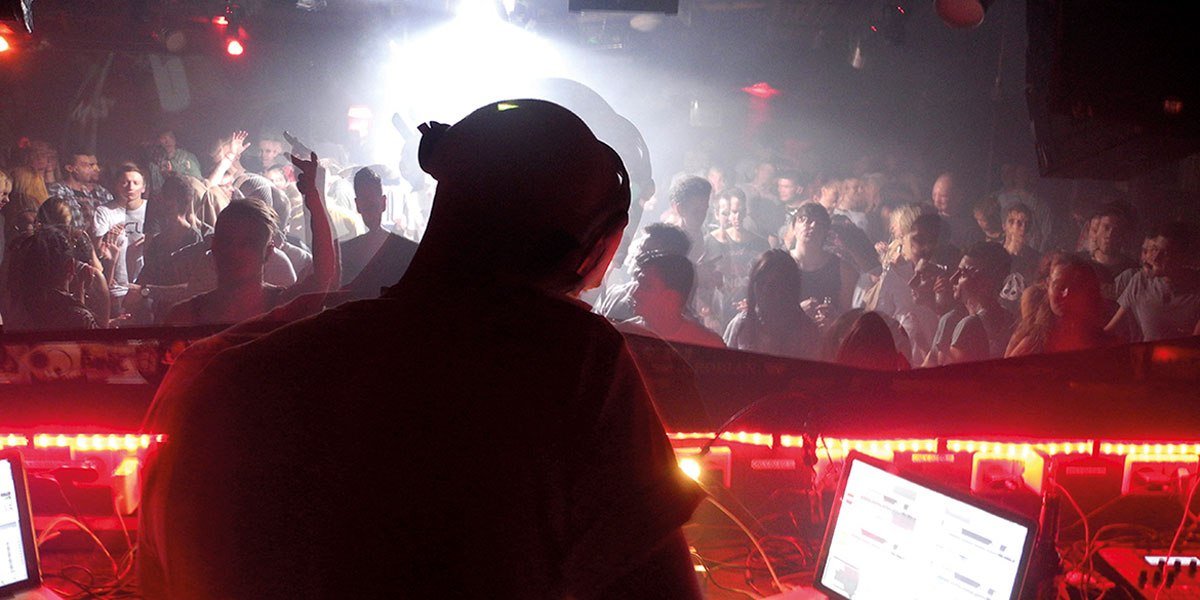
The physical environment reinforces that focus. Lehmann is essentially a dark basement club rather than an architectural spectacle. Steel, concrete, low light and an enclosed dancefloor produce what the team itself affectionately describes as a “rough basement hole.” The room is designed around pressure and sound rather than elaborate decoration.
Artists have repeatedly highlighted its acoustics. Joseph Capriati, after playing a Drumcode event at Lehmann, specifically praised the combination of the soundsystem and shape of the room for producing a powerful but warm sound. DJ Rush, who had previously played in the same space when it was M1, described returning to Lehmann as coming home to a familiar location with an entirely new look and sound.
Residents and the Stuttgart Scene
One of the most important aspects of Lehmann is the continuity of the people behind it. Much of its core team has remained together since the opening, while residents have been treated as a fundamental part of the club rather than simply support for touring headliners.
Artists including Raphael Dincsoy, Lukas Stern, Simo Lorenz and David Löhlein have been associated with different periods of this resident culture. Around them, collaborations developed with Stuttgart collectives such as Vision Ekstase, NewKids, Wohnzimmer and Halbwelt.
Vision Ekstase became particularly closely connected with the venue. Löhlein has described having his studio inside Lehmann since 2019 and the surrounding community as a network in which artists, promoters and friends work alongside each other. The building has consequently developed functions extending beyond weekend club nights.
This broader ecosystem now includes studios, a tattoo space, booking activities and Lehmann Musik, the club’s own label founded in 2018. The label documents music by residents, regular guests and artists connected with the venue, extending the Lehmann identity beyond Stuttgart.
Stuttgart
Lehmann’s longevity is particularly significant because Stuttgart has never possessed the international club mythology of Berlin. The city nevertheless developed a substantial electronic music scene, and venues including Prag, M1, Zollamt, Toy and Romy S. created successive generations of local club culture.
Many of those institutions eventually disappeared.
Lehmann survived, gradually becoming one of the few places connecting contemporary Stuttgart techno directly with the city’s earlier scene. The fact that it physically occupies the former M1 while being created by people associated with Prag makes this continuity unusually tangible.
The club has also resisted becoming dependent exclusively on increasingly expensive headline DJs. Its team has openly discussed the danger of a venue whose audience attends only because of individual international artists. Residents, local promoters and recurring communities are therefore essential to keeping the club identifiable when there is no major name on the poster.
Present
More than fifteen years after opening, Lehmann remains at the same Bosch-Areal address and continues to operate primarily on Friday and Saturday nights. Its current structure extends considerably beyond the original basement: club, residents, label, studios, agency activities, local collectives and awareness initiatives now form parts of the same ecosystem.
Musically, however, the central idea has changed surprisingly little.
Lehmann is still dark, direct and heavily focused on techno. It has neither the monumental industrial architecture of Berghain nor the enormous cultural infrastructure surrounding clubs such as Tresor. Its significance comes instead from continuity.
Prag disappeared. M1 disappeared. The people and dancefloor culture surrounding them did not.
In 2009, part of that history moved into a basement beneath the Bosch-Areal, removed eight tonnes of rubble and started again under a new name. More than fifteen years later, Lehmann is no longer simply the successor to Stuttgart’s earlier techno clubs. It has become an institution in its own right.
