



1 Chome−22−12, Shibuya – Tokyo, Japan
MITSUKI is one of the small spaces that make Tokyo’s electronic music culture fundamentally different from cities dominated by large clubs. Hidden beneath a building at the upper end of Dogenzaka in Shibuya, it has room for only around 100 people and deliberately exists somewhere between a DJ bar and a nightclub.
Opened on 23 July 2019, MITSUKI was conceived by Japanese rapper and nightlife figure RYUZO, with its interior designed by art director and DJ YOSHIROTTEN. Rather than building another conventional Shibuya club, they described the project as a music sakaba — essentially a music tavern: somewhere people could drink seriously, listen seriously and, when the night developed in that direction, dance.
That ambiguity remains central to the place.
Dogenzaka
MITSUKI is located at 1-22-12 Dogenzaka, near the top of the hill that rises west from Shibuya Station. Dogenzaka has been one of Tokyo’s principal entertainment districts for generations, filled with bars, clubs, restaurants, live venues and love hotels. The neighbourhood contains everything from large commercial nightclubs to tiny establishments occupying single floors of narrow buildings.
MITSUKI belongs firmly to the latter tradition.
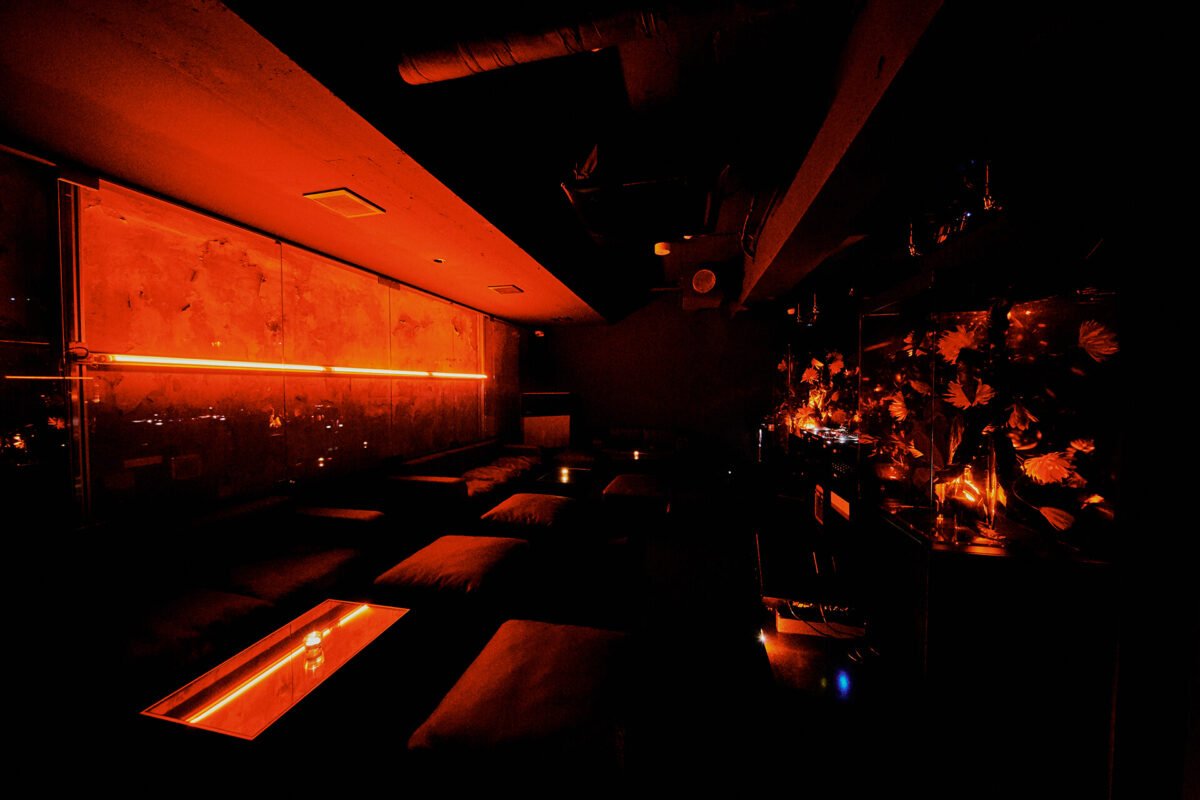
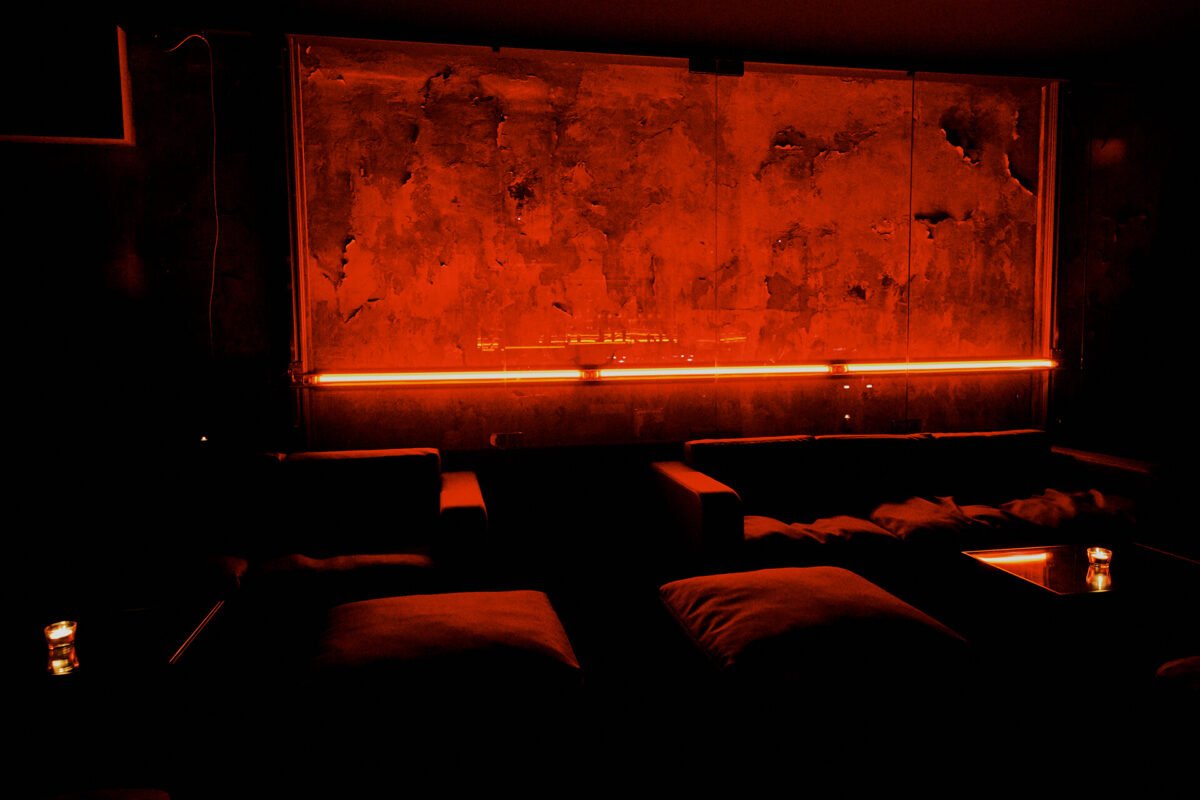
From the street, visitors encounter a heavy black door. Behind it, a black staircase descends into the basement and a dark corridor leads towards an orange illuminated moon. The transition is deliberately theatrical but restrained: rather than revealing a large dancefloor, the basement opens into a compact room containing a bar and DJ booth.
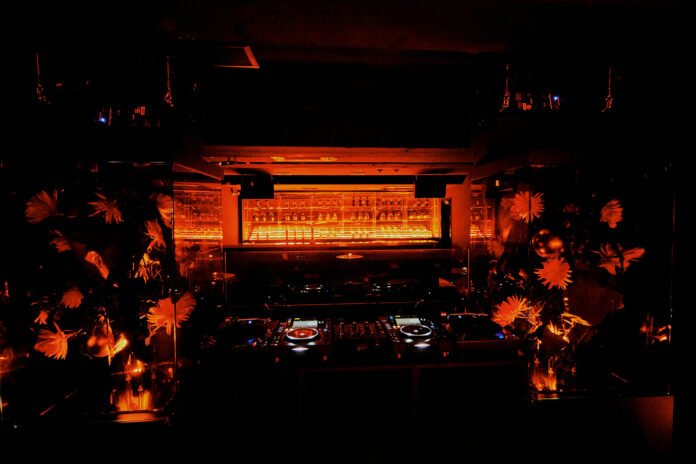
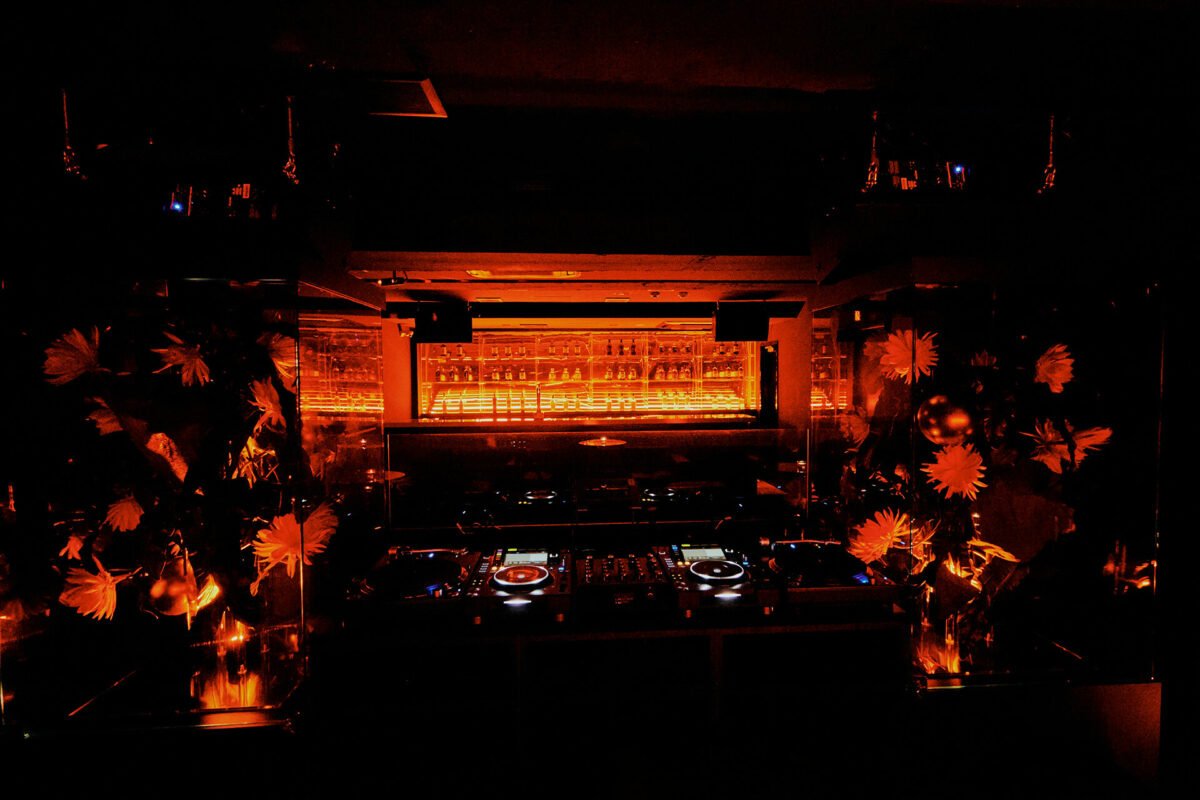
The visual concept revolves around the gekkabijin, or Queen of the Night — a cactus whose flower famously blooms for only a short period at night. Its image appears beside the DJ booth, while the glowing moon provides the central light motif of the interior.
The symbolism fits the venue unusually well: something appears after dark, exists intensely for several hours and disappears again in the morning.
A Music Sakaba
When MITSUKI opened, its creators specifically resisted describing it simply as either a club or a bar.
RYUZO had already established BLOODY ANGLE, a Shibuya record bar opened in 2016, and his approach to nightlife was influenced by wanting smaller places where music could exist alongside conversation, drinking and social interaction. MITSUKI pushed the idea further towards dancing without abandoning the intimacy of a bar.
The distinction becomes obvious through scale. The entire venue accommodates approximately 100 people, while the actual dancefloor has been described as holding around 70. Six Pioneer speakers serve the main space, with an Alpha Recording System Model 9000 rotary mixer in the DJ booth. A separate VIP room was originally equipped with Lowther TP1 Type D loudspeakers.
These are unusually specific technical choices for such a small venue. They also place MITSUKI within a wider Japanese culture of listening bars, jazz kissa and audiophile spaces where the reproduction of recorded music can be treated with the same seriousness as live performance.
But MITSUKI is not a silent listening room. People drink, talk and move between the bar and dancefloor. As the night progresses, the balance can shift almost imperceptibly from bar to party.
Music Without a Fixed Genre
Unlike VENT, which built a relatively clear identity around house and techno, MITSUKI was deliberately genre-fluid from the beginning.
Its original musical description included disco, soul, house, techno, experimental and ambient, and the opening programme immediately demonstrated that range. The first night brought together Kenji Takimi, Hiroshi Kawanabe, Force of Nature, Mild Bunch, YATT and Yamarchy. Gonno followed later that week, CYK took over the following night and New York outsider Madteo appeared shortly afterwards.
This established an important characteristic of the venue: selection matters more than genre.
A night can move through deep house, minimal, electro and techno, while another might concentrate on disco, ambient or experimental music. The small capacity makes it possible to programme selectors whose appeal comes from record knowledge rather than their ability to sell hundreds or thousands of tickets.
That approach reflects an important layer of Tokyo nightlife. The city’s electronic culture is not concentrated exclusively in famous institutions such as WOMB or large contemporary complexes. It exists through a dense network of small DJ bars, record shops, listening spaces and basement clubs where scenes overlap.
MITSUKI functions as one of those intersections.
Design as Part of the Club
YOSHIROTTEN’s involvement is also significant. Known for work across graphic design, fashion, art and music, and himself active as a DJ, he treated MITSUKI less like a conventional nightclub interior than a complete visual environment.
The orange moon, Queen of the Night imagery, dark corridor and subdued illumination create a distinctive atmosphere without relying on LED screens or elaborate club production. The room is intentionally warm rather than industrial.
This produces an interesting contrast with many European underground clubs. There is no abandoned factory, power station or enormous concrete warehouse. MITSUKI occupies an ordinary basement in one of the densest urban environments in the world.
Its identity therefore has to be created at the scale of details: lighting, furniture, speakers, drinks, records and the relationship between the DJ and a few dozen people.
The drinks themselves were part of the concept from the beginning. Instead of treating the bar simply as infrastructure supporting the dancefloor, MITSUKI developed a selection including Japanese whisky, vintage bottles and natural wine. Drinking and listening were intended to carry comparable weight.
Small-Scale Tokyo
MITSUKI becomes particularly interesting when placed alongside Tokyo venues such as VENT.
VENT represents a highly engineered version of the intimate electronic club: specialised acoustics, a purpose-designed soundsystem and a strong house and techno programme. MITSUKI is smaller and less musically defined. Its identity comes from the overlap between bar culture, record culture, design and dancing.
That distinction is important because Tokyo’s underground cannot be understood only through conventional clubs.
Space in the city is expensive and fragmented. Consequently, nightlife frequently develops vertically and underground, inside basements and upper floors that would seem impossibly small by European club standards. A room accommodating 70 dancers can nevertheless become an important meeting point if the programming and community around it are strong enough.
MITSUKI embraces that limitation rather than attempting to disguise it.
Present
More than seven years after opening, MITSUKI remains in the same Dogenzaka basement. The black entrance, illuminated moon and Queen of the Night continue to define the space, while its programme still moves between different generations and genres of Tokyo’s DJ culture.
It is easy to overlook a venue like MITSUKI when describing Japanese clubbing. It lacks the historical scale of WOMB, the acoustic engineering reputation of VENT or the international visibility associated with larger clubs.
But small rooms are fundamental to Tokyo.
They allow established DJs to play differently, provide younger selectors with spaces to develop, and create connections between people that become increasingly difficult when nightlife is organised around thousand-capacity events.
MITSUKI reduces that culture to almost domestic proportions: a basement, a bar, a rotary mixer, a few speakers and enough space for around seventy people to dance.
In a city of more than ten million people, its significance comes partly from being so small.
