



Alt-Stralau 1-2 – Berlin-Bezirk Friedrichshain-Kreuzberg, Germany
OST is a techno club located at Alt-Stralau 1–2 on the eastern edge of Friedrichshain, between Ostkreuz and Treptower Park. Occupying a former power station connected with Berlin’s old harbour infrastructure, the venue combines a large industrial dancefloor with a maze of smaller corridors, staircases and secondary spaces. Its position directly beside the Spree places it within one of the most important territories in Berlin’s recent club history, surrounded by former industrial sites that have repeatedly been transformed into temporary cultural spaces.
Opened in November 2017, OST is considerably younger than institutions such as Tresor or Berghain, but the building itself already had a substantial nightlife history before the club arrived. Most importantly, it was previously home to Magdalena, a large Berlin club that operated there until early 2017. OST therefore represents less the discovery of a new industrial space than another chapter in the continuous reuse of one of eastern Berlin’s established club locations.
Alt-Stralau
The club stands at the entrance to the Stralau peninsula, where the Spree and Rummelsburger See meet. Today the area sits between the dense nightlife geography of Friedrichshain and the increasingly residential development around the waterfront, but historically Stralau and the surrounding districts were strongly shaped by industry, transport and energy infrastructure.
OST occupies a former power station associated with the Alt-Stralau harbour area. The building is more than a century old and retains much of the physical language that has made industrial architecture so closely associated with Berlin club culture: large volumes, exposed structural elements, concrete surfaces and an exterior that still communicates its previous utilitarian purpose.
Its location is particularly interesting because several different strands of Berlin nightlife intersect nearby. Ostkreuz and Friedrichshain lie to the north, while Treptower Park begins immediately across the Spree. Salon zur Wilden Renate is only a short distance away, and the wider corridor stretching towards the RAW complex, Osthafen and Schlesisches Tor has contained dozens of clubs and temporary cultural projects since reunification.
This is also an area where the tension between nightlife and redevelopment is particularly visible. Former industrial and railway properties around the Spree have progressively become offices, residential developments and commercial projects. OST survives within a landscape where the raw urban conditions that once enabled Berlin’s club culture have become increasingly scarce.
Before OST: Magdalena
The most important predecessor at Alt-Stralau 1 was Magdalena. The club became known for large electronic music events and made extensive use of the unusual industrial building, establishing the address as a recognised nightlife destination before OST existed.
Magdalena itself belonged to the constantly changing geography of Berlin clubs. The project had previously operated in another industrial building near the Spree before moving to Alt-Stralau. Its presence reinforced the idea that a Berlin club was not necessarily defined by permanent ownership of a building. Venues could disappear, relocate and reappear while maintaining parts of their community and identity.
By early 2017, Magdalena had closed following financial difficulties and disputes surrounding the property. The building was subsequently taken over and renovated. The new operation initially appeared under the name 1 Stralau, conceived primarily as a flexible event location with a beer garden, corporate events and external productions rather than another permanent underground nightclub.
The transformation significantly cleaned up the interior. Contemporary reports noted that much of Magdalena’s deliberately rough, worn character disappeared during renovation as rooms became more spacious and functional. One particularly important element survived, however: the substantial sound system installed in the building.
It soon became clear that electronic music would remain part of Alt-Stralau.
Opening OST
OST officially opened on 4 November 2017. The name is simply the German word for “east”, an appropriate reference both to its location in eastern Berlin and to the surrounding Ostkreuz, Osthafen and Friedrichshain geography.
The opening programme immediately positioned the club within underground electronic music rather than mainstream nightlife. Vakula, LA-4A, John Osborn and Jennifer Touch played the first event, presented by Dred Records. At the time, the club was announced with a capacity of around 600 people.
Initially, the plan was relatively restrained. Rather than operating every weekend, OST was expected to host only a small number of club nights each month while the wider 1 Stralau complex continued functioning as an event venue. This differentiated the project from Berlin’s traditional weekend-long club model and allowed individual promoters to shape the space around specific events.
The division between the commercial event location and the nightclub was deliberate. OST received its own name and identity so that its electronic music programme could develop separately from corporate events and other activities taking place within the same complex.
Over time, however, the club side became increasingly established. OST developed a regular programme, hosted external promoters and gradually became recognised as a permanent part of Berlin nightlife rather than an occasional use of 1 Stralau.
Architecture
OST’s architecture remains one of its strongest characteristics. The former power station provides a scale that would be difficult to reproduce in a purpose-built inner-city nightclub, but the building does not consist simply of one enormous warehouse room.
Floors and secondary spaces are connected through narrow corridors and staircases, producing an unexpectedly fragmented interior. Visitors can move from the central dancefloor into smaller rooms and transitional areas before emerging elsewhere in the building. This creates a contrast between the scale of the main space and the intimacy of the circulation around it.
The aesthetic is intentionally restrained. Exposed concrete, industrial surfaces and minimal lighting allow the architecture to remain visible without turning the former power station into a theatrical reconstruction of industrial Berlin. The building itself provides most of the visual identity.
This approach differs from clubs where elaborate scenography constantly transforms the dancefloor. At OST, light and production tend to reinforce the dimensions of the existing architecture rather than conceal it. The result is a space capable of feeling monumental during harder techno events while remaining relatively neutral for promoters working with different styles.
The relationship with the river adds another dimension. OST sits directly beside the Spree, and outdoor areas can become particularly important during warmer months and extended events. As with many Berlin clubs, the transition between an enclosed industrial dancefloor and daylight outside changes the character of a long night considerably.
Sound
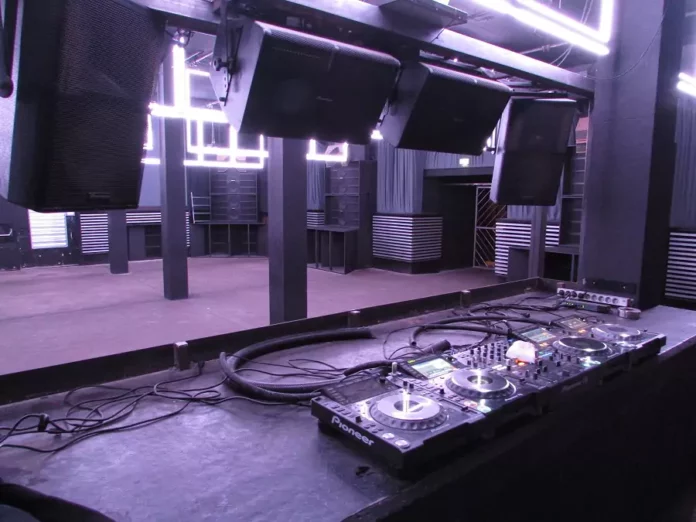
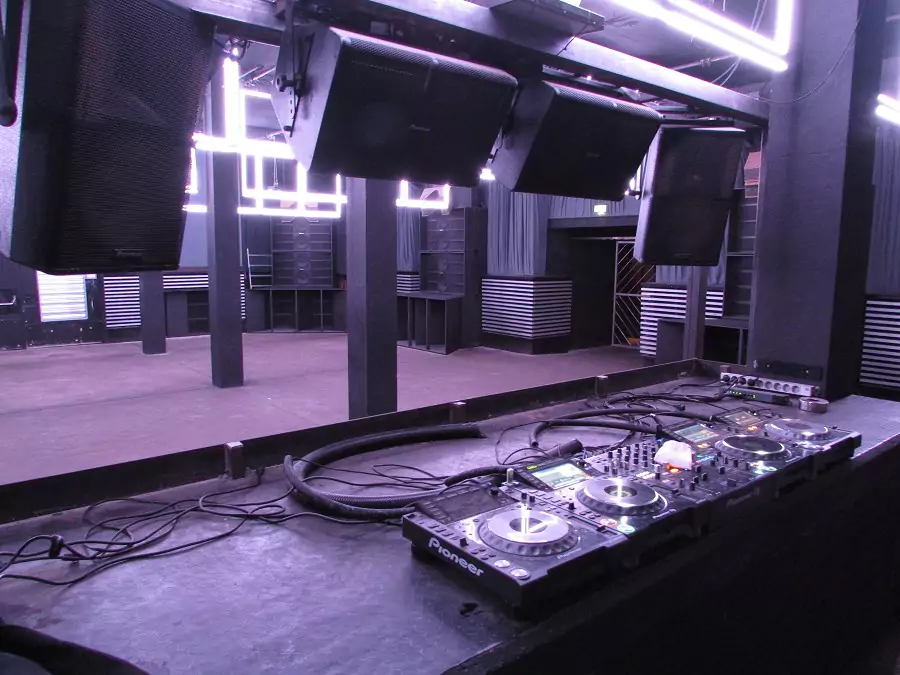
Sound has been important to the building since the transition from Magdalena to OST. When OST opened in 2017, it retained the existing Pioneer Pro Audio system from its predecessor. The main room was designed around a custom eight-stack configuration created by American sound specialist Gary Stewart, whose work has been associated with club and dance music systems internationally.
The arrangement was intended to distribute sound evenly throughout the room rather than simply producing maximum pressure from speakers concentrated around the stage. This made the venue particularly interesting for events focused on detailed or spatial electronic music.
CTM Festival recognised this potential almost immediately. For its 2018 edition, the festival used the newly opened OST for a programme specifically designed around the room’s sound capabilities. Special Request and Jlin were among the artists invited to use the system, connecting the club with a more experimental side of Berlin’s electronic music ecosystem shortly after its opening.
That relationship between scale and sonic detail remains important to OST. The room can support physically intense techno, hardcore and faster contemporary styles, but its architecture and sound system also allow more complex rhythmic music to function effectively.
Music
Techno has gradually become the central language of OST, although the club’s history has never been restricted entirely to one interpretation of the genre. House, electro, experimental electronics, trance, hardcore and faster forms of contemporary rave music have all appeared in its programme.
Part of this diversity comes from the club’s reliance on collaborations with external promoters. Instead of every night carrying exactly the same musical identity, recurring series and collectives can temporarily redefine the venue. Queer parties, harder techno events and more experimental programmes consequently coexist within the same building.
This model has become increasingly visible in the current programme. Events such as Slave To The Rave, Gegen, Pinky Promise, Devoted, Odd and other independent series use OST alongside the club’s own programming. The result is a calendar that can move between industrial and hypnotic techno, hardgroove, trance, gabber and hardcore rather than settling into a single narrowly defined sound.
OST also runs Savory, a regular Thursday techno series. The format provides a lower-cost midweek entry into the club and gives emerging and less internationally established DJs space alongside Berlin-based artists. It adds a different layer to the venue from the larger weekend productions and helps keep OST connected with the city’s local DJ ecosystem.
Queer Culture and Safer Space
Queer promoters have become an important part of OST’s contemporary identity. The club regularly hosts events built around LGBTQ+ communities, while its general policies emphasise consent, respect and the ability to approach awareness or security staff when problems occur.
OST also operates a no-photo policy. Like similar policies at many Berlin clubs, the objective is not simply secrecy but the creation of an environment in which visitors are less conscious of being documented. This is particularly important for queer events and other spaces where freedom of expression depends partly on separating the dancefloor from the constant visibility of social media.
The approach places OST within a broader evolution of Berlin club culture. Earlier generations often relied on unwritten social codes enforced primarily through selective door policies. Contemporary venues increasingly supplement these with explicit awareness structures and published expectations concerning harassment, discrimination and consent.
OST combines both traditions: the relative anonymity historically associated with Berlin nightlife and a more formalised contemporary approach to safer club environments.
OST Within Berlin
OST occupies an interesting middle position within Berlin’s club hierarchy. It is neither a tiny community space nor one of the city’s enormous destination clubs. Its roughly warehouse-scale architecture allows substantial events without creating the sense of entering a self-contained institution such as Berghain.
Its location also gives it a different identity from Berlin’s increasingly peripheral warehouse clubs. Alt-Stralau remains relatively central and can be reached on foot from both Ostkreuz and Treptower Park. The club therefore sits within the existing nightlife geography of Friedrichshain while retaining an industrial waterfront environment.
Comparisons with nearby Renate are particularly revealing. The two venues are geographically close but spatially almost opposite. Renate occupies a labyrinthine former residential building where numerous decorated rooms create a deliberately surreal domestic environment. OST uses the architecture of a former power station and largely allows its industrial scale to remain visible.
Æden provides another useful contrast. Its garden and vegetation continue Berlin’s tradition of open-air, semi-improvised club spaces, while OST represents the harder architectural language of the city’s industrial nightlife. Together they demonstrate how many different spatial models continue to coexist within a relatively small part of eastern Berlin.
Present
OST remains active at Alt-Stralau 1–2 in 2026, almost nine years after its opening. Its current programme is considerably denser than the original concept of only a few parties each month. Thursday techno sessions now sit alongside weekend events, external promoters, queer parties and occasional extended formats.
The musical direction has also evolved with Berlin itself. While house and more experimental electronic music played an important role in OST’s early years, the current calendar reflects the renewed popularity of harder and faster club music. Techno, hardgroove, trance, hardcore and gabber increasingly coexist with the broader electronic programming established during the club’s first years.
Yet the most interesting aspect of OST remains the continuity of the location. Berlin nightlife is often described through clubs as individual institutions, but Alt-Stralau demonstrates how the physical spaces themselves can have histories that extend beyond a single name.
A power station became a nightclub. Magdalena established the building as a destination for electronic music, disappeared, and left behind both physical infrastructure and cultural memory. 1 Stralau renovated the complex and initially imagined a broader event venue. OST then returned club culture to the centre of the building’s identity.
The names changed, the interior was rebuilt and the music evolved, but dancing remained.
In a city where redevelopment repeatedly erases nightlife spaces altogether, that continuity makes OST particularly relevant. It represents not the discovery of another abandoned Berlin building, but the ability of an existing club location to survive successive transformations and remain part of the city’s electronic music landscape.
