



gillian house, Stephenson St – London E16 4SA, United Kingdom
FOLD is one of London’s most important contemporary techno clubs and a central institution in the city’s underground electronic music scene. Located on an industrial estate between Canning Town and Star Lane in East London, the club opened in 2018 with a rare 24-hour licence and a philosophy built around long-form clubbing, freedom of expression and a strong sense of community.
While London has one of the richest electronic music histories in the world, strict licensing laws and constant pressure from property development have often made extended club experiences difficult to sustain. FOLD was conceived partly as a response to this environment: a place where parties could continue from night into morning and afternoon without the rigid closing times that shape much of British nightlife.
Its combination of industrial architecture, powerful sound, extended events and explicitly inclusive culture has made FOLD one of the closest London equivalents to the long-form clubbing traditions associated with Berlin, Amsterdam and Tbilisi.
Origins
FOLD was founded by Seb Glover and Lasha Jorjoliani, better known as DJ and producer Voicedrone, and grew out of the wider activities of Shapes Collective.
Before FOLD existed, the people behind the project had already been involved with temporary venues, parties and London’s warehouse culture. Several figures who later became closely connected with the club had crossed paths through Shapes and the electronic music scene around Hackney Wick.
The search for a permanent home eventually led east to Canning Town.
The building they found was Gillian House on Stephenson Street, an industrial property situated between Canning Town and Star Lane. The space had previously been connected with a printing business and was far removed from the conventional nightlife districts of central London.
This isolation was an advantage.
Surrounded largely by industrial infrastructure rather than residential streets, FOLD could develop a type of club that would be extremely difficult to operate in many other parts of London. Most importantly, the venue secured a 24-hour licence.
The team transformed the raw industrial space themselves, gradually constructing the dancefloor, sound and lighting infrastructure around the existing building.
FOLD officially opened on August 18, 2018 with The First Dance, a 24-hour event bringing together numerous London collectives and soundsystems.
A 24-Hour Club
The 24-hour licence became one of FOLD’s defining characteristics.
London has a long history of all-night parties and illegal warehouse raves, but permanent licensed venues capable of operating continuously are relatively unusual. FOLD created the possibility of experiencing this extended culture inside a professionally equipped club.
From the beginning, the founders spoke about taking inspiration from cities including Berlin, Amsterdam, Tbilisi and Tokyo, where long club sessions allow the relationship between DJs and audiences to develop differently.
Instead of treating every night as a sequence of short headline sets, FOLD could give artists considerably more time.
A party might begin around midnight and continue well into the following afternoon. DJs could play extended sets, unusual back-to-backs could develop naturally, and the musical character of the room could change dramatically between darkness and daylight.
This relationship with time became fundamental to the venue.
FOLD is not simply a club that happens to stay open late. The possibility of staying for eight, twelve or twenty-four hours affects the structure of the entire event.
Sound and Architecture
The main room was originally designed around a dancefloor of approximately 600 capacity.
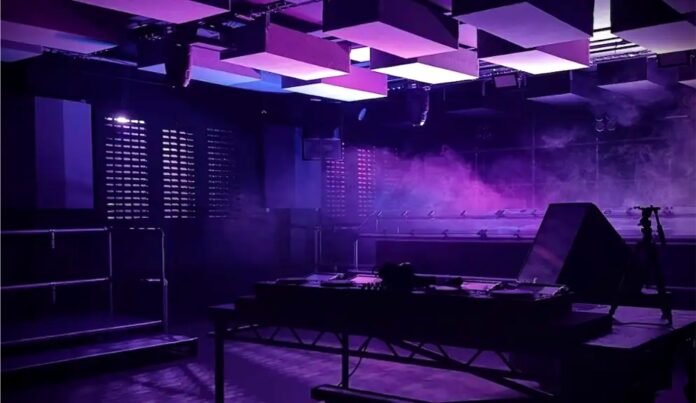
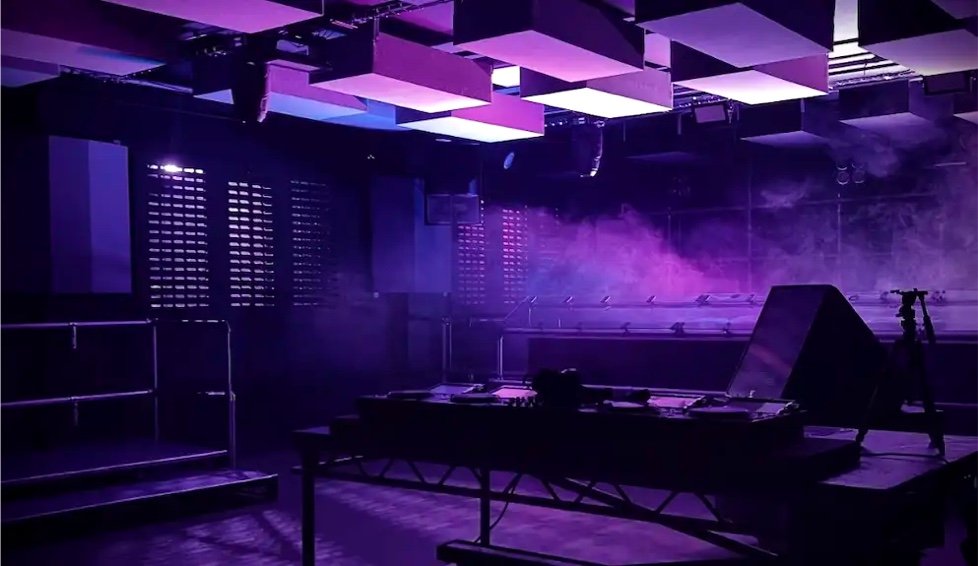
Its architecture remains intentionally industrial. Concrete, exposed structural elements and minimal decoration dominate the environment, while lighting is designed primarily to support the atmosphere of the room rather than turn the DJ into a stage performer.
Sound has always been central to the project.
FOLD installed a custom system capable of producing extremely low frequencies and high sound pressure while maintaining clarity across the dancefloor. The relative isolation of the industrial site gives the club freedoms that would be difficult to achieve in a residential neighbourhood.
The DJ booth is positioned close to the audience, reinforcing the idea that the DJ forms part of the dancefloor rather than performing above it.
The wider complex was also conceived as more than a nightclub. Purpose-built music studios were incorporated into Gillian House, creating infrastructure for production and creative work outside club hours.
This combination of nightclub and working music environment reflects the founders’ ambition to create a permanent cultural space rather than simply a weekend venue.
Music
Techno sits at the centre of FOLD’s international reputation.
The club has developed particularly strong associations with hypnotic, industrial, raw and harder forms of techno, while artists from across the European underground regularly appear in its programme.
Dax J, Oscar Mulero, Reeko and numerous other artists became closely associated with its early years, while subsequent programmes have connected FOLD with a wider generation of contemporary techno DJs and producers.
However, the musical identity of the venue is considerably broader than techno alone.
House, electro, acid, bass, breaks and experimental club music all appear within its calendar. Residents similarly represent different approaches, from raw hypnotic techno to more eclectic and rhythmically diverse forms of electronic music.
FOLD’s current resident programme includes artists such as Gareth Wild and Lockhart, alongside other selectors connected with the community surrounding the venue.
The common element is less a specific genre than an approach to the dancefloor: music intended to develop over time rather than function as a sequence of isolated headline performances.
UNFOLD
Perhaps the clearest expression of FOLD’s philosophy is UNFOLD.
The Sunday party became one of the club’s defining institutions and developed a reputation extending far beyond London. Events generally begin during the day and continue into the night, creating an environment somewhere between an afterhours session, Sunday club and community gathering.
Line-ups are traditionally unannounced.
Rather than selling the event around individual DJ names, UNFOLD asks the audience to trust the club and the community behind it. Artists can therefore appear without the hierarchy normally created by festival posters and headline billing.
Admission is available on the door rather than through conventional advance ticketing.
The format shifts attention away from celebrity and towards the collective experience of the dancefloor.
UNFOLD is also closely associated with London’s queer community. While FOLD itself maintains an explicitly inclusive philosophy, UNFOLD developed into a particularly important space for queer dancers, artists and communities within the city’s electronic music scene.
The atmosphere can move between techno, house, acid, electro and harder experimental sounds over the course of a single extended session.
Its success has made UNFOLD almost an institution within an institution: a party with an identity strong enough to exist independently while remaining inseparable from FOLD itself.
Freedom and Inclusivity
From the beginning, FOLD described itself as a space for freedom of expression.
The club operates a strict policy against racism, sexism, homophobia, transphobia, ableism and harassment. This is particularly important to its identity as a venue serving overlapping queer, electronic music and underground communities.
Photography has also been restricted since the club opened.
The no-photo approach reduces the presence of phones on the dancefloor and protects the privacy of people inside. As at clubs such as Berghain, Bassiani and increasingly many smaller European venues, what happens inside is intended primarily for the people participating rather than an audience watching through social media.
These policies connect with a broader philosophy behind FOLD: the nightclub as a temporary autonomous social environment.
For several hours, the industrial building becomes disconnected from the rhythms and expectations of everyday London life.
Closure and Survival
FOLD’s history has not been completely uninterrupted.
In November 2019, Newham Council temporarily suspended the venue’s licence following allegations connected with a wider National Crime Agency investigation. The club strongly challenged the decision and appealed against the suspension.
The episode briefly placed the future of the venue in doubt only a little over a year after it had opened.
Soon afterwards, an even larger disruption arrived with the Covid-19 pandemic and the closure of British nightlife.
FOLD survived both periods and returned to regular operation, eventually re-establishing its extended parties and UNFOLD sessions.
This survival is particularly significant in London, where many clubs have disappeared over the last two decades as a result of redevelopment, licensing problems, rising operating costs and conflicts with residential development.
Canning Town
FOLD’s location also tells a wider story about the changing geography of London nightlife.
Canning Town was historically shaped by docks, manufacturing, warehouses and infrastructure connected with the Thames. For much of its history it remained far removed from the cultural economy of central and West London.
That landscape has changed rapidly.
Large regeneration projects have transformed significant parts of East London, particularly since the development surrounding the 2012 Olympic Games. Former industrial districts have become increasingly attractive for residential and commercial development.
Electronic music culture has repeatedly moved through precisely these environments.
As warehouses disappear from neighbourhoods such as Hackney and increasingly expensive residential development pushes nightlife further outward, industrial areas around Canning Town, the Royal Docks and the Lea Valley have become important territories for London’s contemporary club scene.
FOLD is one of the clearest examples of this migration.
Unlike temporary warehouse parties, however, it turned an industrial building into permanent cultural infrastructure.
International Connections
FOLD has also developed strong relationships with clubs and collectives outside Britain.
Its philosophy naturally connects it with institutions in cities where long-form clubbing remains particularly important. Exchanges and collaborations have linked the venue with international scenes rather than treating London as an isolated ecosystem.
One particularly significant relationship has developed with Bassiani in Tbilisi.
Both clubs share an industrial architectural language, extended techno programming and an understanding of the nightclub as a social and political space as well as a place for entertainment.
In September 2026, FOLD and Bassiani reunited in London for a 15-hour, two-room event bringing artists from the Georgian and British scenes together.
These exchanges reinforce FOLD’s position within a wider network of European clubs built around similar values: sound, community, inclusivity and the preservation of independent nightlife.
Present
Today, FOLD remains at Gillian House on Stephenson Street and continues to operate as one of London’s principal destinations for underground techno and electronic music.
Regular FOLD events bring international artists together with residents and London collectives, while UNFOLD continues its Sunday sessions with secret line-ups and door-only admission.
The club remains relatively modest in capacity compared with London’s largest venues, but its influence is disproportionate to its size.
FOLD represents a particular interpretation of what a contemporary London club can be.
Fabric demonstrates the longevity and institutional scale of British club culture. Phonox reduces the format to a focused single-room experience built around extended DJ sets. FOLD takes another direction: an industrial, community-driven space where the ability to continue dancing through the morning and into the next day becomes part of the architecture itself.
Its location, 24-hour licence, sound system, queer ethos and long-form programming have created something that London historically struggled to sustain within permanent venues.
In a city famous for rave culture but often hostile to the spaces required to maintain it, FOLD has managed to turn the temporary freedom of a warehouse party into a lasting institution.
