



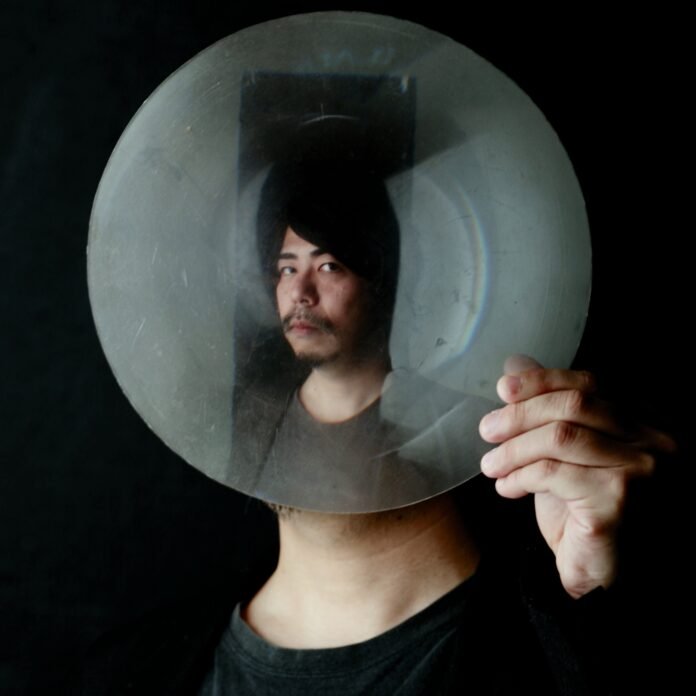
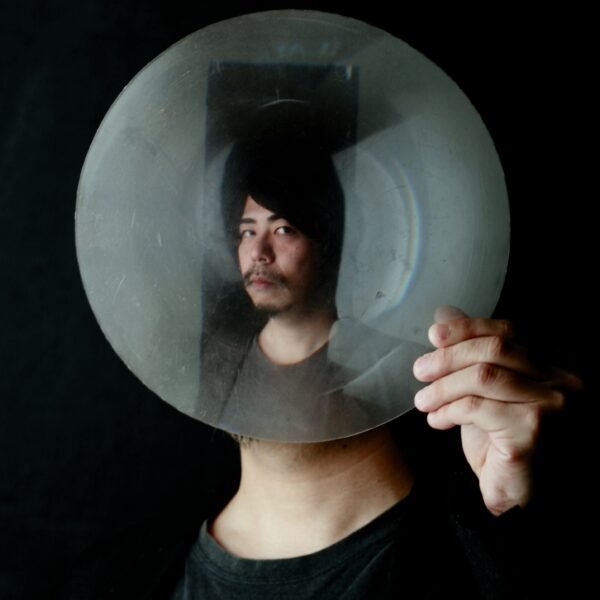
It’s really difficult to describe Takaaki Itoh by using words only. They all seem to be not enough to express the essence of one of Japan’s most underground and respected DJs & producers. His vision of techno is pure, unique and raw; can be understood and experienced best while being present at 100% on the dancefloor and leaving the world behind.
Takaaki Itoh will play at Muse Festival 2026 and we’re very grateful to have him – both in the line-up and here, at Underton. We asked about the past, present and future of electronic music, his favorite tracks of the moment, as well as expectations about the festival. Enjoy the interview and let’s dance together in Balzaq Palace!
Agata Omelańska: Hello Takaaki, it’s an honor to welcome you here. You’re playing at the upcoming edition of Muse Festival and we can’t wait to see you in Balzaq Palace. How do you feel about playing in completely new places? And is there something that you can’t wait to experience at the festival?
Takaaki Itoh: I’m already excited to play in a new place, Muse Festival! I want to experience all the people united by music.
What’s your favorite opening track at the moment? And is there a track that you’re looking forward to play at Muse Festival?
For the intro, I’m often playing “Long Distance Probe” by Montero. And I’m looking forward to playing the new Planetary Assault Systems’ album from Ostgut Ton, “Planetary People”.
Let’s take a look at the festival’s line-up: if you could play a spontaneous back-to-back, who would be your partner behind the decks? And why?
Oh I can’t choose, there are so many great guys. But I could interact with anyone.
Your style has changed over the years, but the evolution has been an important element of your whole career path. How did you develop (and maintain) a strong identity as an artist?
I was influenced with how Jeff Mills plays so much when I was young. I’m still on it. I have been trying to find an original style for a long time, and it’s yet to come.
Your identity was, undoubtedly, built on releases for labels such as Electracom, Planet Rhythm Records, Mord, Warm Up, Modularz or Tsunami. Looking back, what was your biggest and most important experience from these collaborations? And what was the kindest feedback about your music you’ve ever received?
Each release of them was big and important for me. It came universally and naturally by connecting inevitably.
The first release, “Byte” was for Electracom label. I sent a demo tape to them and got feedback by faxing for the first time in my life. That was unforgettable.
Another milestone was launching your own label. wols started in 2002 and it’s a platform dedicated to your own releases and their remixes by artists such as Oscar Mulero, Sleeparchive, Christian Wünsch, Mike Parker. What are your future plans for the label?
I have to wake up do forwardly, because of long time sleeping. It’s still very personal, so it will be featured with producers who I really respect.
And what does „slow” mean, in reference to the label’s name read backwards?
Yes, it is. Just upside down!
You’ve experienced the rise of techno in a completely different era – music-wise, how did Japan in the 90s look like? And if you were starting your career right now, what would you focus on?
Jeff Mills changed everything in the 90s. He came to Tokyo and everyone was impressed.
Every single new thing was exciting at that time.
There are thousands of DJs and producers now. So, I need to be a stand up character among them. It should be with music itself.
The most interesting element of your local scene is…
Compared to Europe, the local scene in Japan is not so big, but it’s quite strong. People mostly go for music as a reason to go.
When you’re not in the studio, touring or dedicating your time to music, what do you do? How do you take care of your creativity?
I always tour for more than 2 weeks to 2 months away from my studio in Japan. I make some sketches while I’m on tour with my laptop.
Why does techno always evolve and stay fresh?
Techno has something deep inside, as we understand each other.
It exists in a modern and primitive way together, without languages.
Thank you so much for the interview and time dedicated, Takaaki. See you at Muse Festival soon!