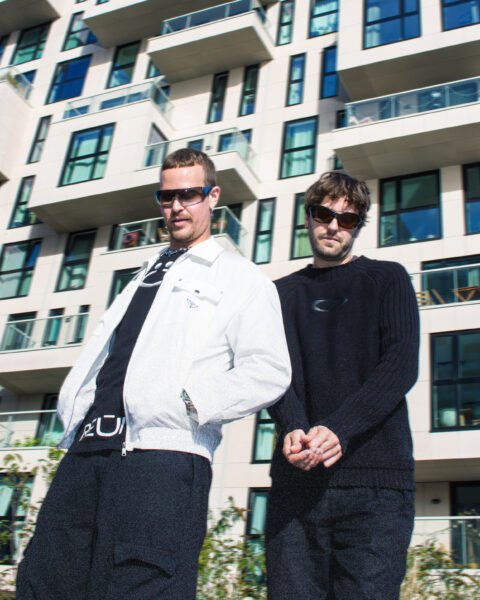

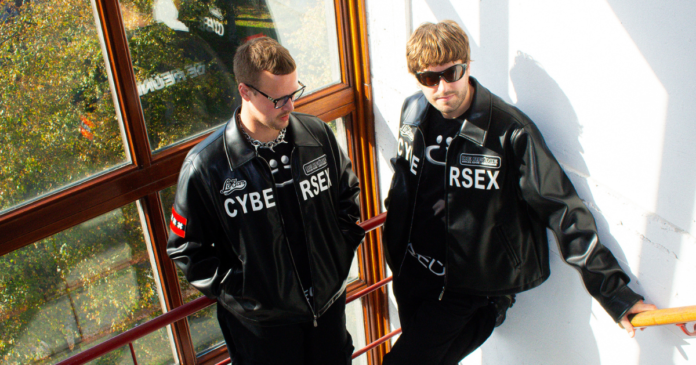
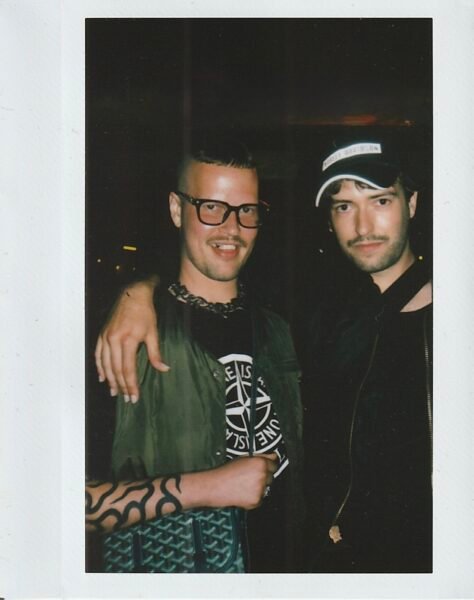
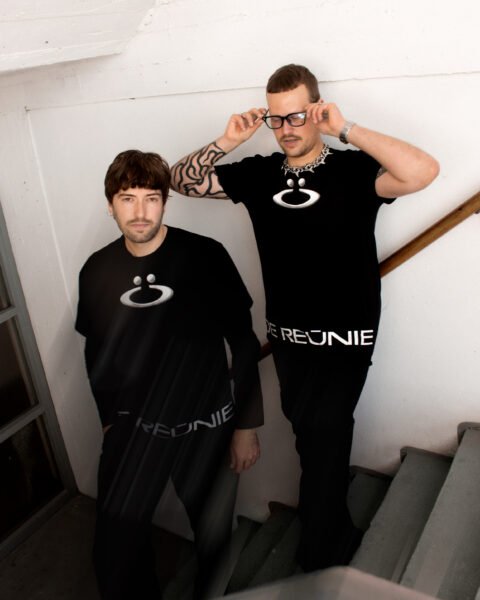
Practicing the joy of life, connecting with people on the dancefloor and not taking themselves too seriously. That’s the Amsterdam duo Cybersex’s vision of being present in the electronic music scene – for Nick Edwards and Stef de Haan playing together is a natural result of loving what they do. At the same time, they use their energy to create something special for the community they grew in – both as DJs and as a collective, well-recognized as De Reünie.
„We’re not worrying too much about whether something is considered cool or serious enough”, Nick and Stef admit. And their voice opens a very important discussion about being a professional in the music industry, but – at the same time – stop overthinking everything and simply enjoy the music.
Agata Omelańska: Hi, Stef, and welcome, Nick! Welcome to Underton! You’re both DJs, producers, co-founders, and residents of the De Reünie collective. You’ve been working together on the Cybersex project and you’re both from Amsterdam. What else should we know about you?
Cybersex: We’re Nick and Stef, two friends from Amsterdam who share a big love for electronic music, nightlife and bringing people together. Besides DJing as Cybersex, we run De Reünie, our own collective and event series in Amsterdam. We also DJ individually as Edwards and Stef de Haan. Stef produces his own music as well, but as Cybersex, we focus solely on DJing.
We’ve been active in the scene since around 2020, when we started organising our own parties during COVID. What began as small underground gatherings eventually grew into something much bigger, taking us from Amsterdam to clubs in London and Berlin.
We love what we do, but we also try not to take ourselves too seriously.
At the end of the day, it’s about having fun, sharing music and creating memorable moments together.
What musical backgrounds do you come from? How did they influence the paths you chose, and when did fate bring you together on the same path?
We actually met while studying at AMFI, the Amsterdam Fashion Institute. From that moment on, we started going out together pretty much every weekend, visiting parties like Eerste Communie, Spielraum and De School. Those places had a huge influence on us and shaped the way we experienced club culture.
When COVID hit and everything shut down, we suddenly had all this time and energy with nowhere to go. So we started organising our own illegal parties and eventually got into DJing ourselves. What started as a way to keep the party going quickly turned into something much bigger, and that’s really where our journey together began.
If you were to introduce yourselves through the lens of the music you listen to, do your record or song collections overlap? Are they two completely different playlists?
There’s definitely a lot of overlap, but we also bring different tastes and influences to the table. And that’s exactly what makes playing together interesting.
We both love different genres of house and techno, but Stef is more into speed garage, while Nick leans more towards techno. We don’t really believe in limiting ourselves to one genre, though. Sometimes one of us finds something the other would never have discovered, and that’s often where the fun starts.
As solo artists, you work as producers, but as the Cybersex duo, you focus solely on DJing. What led to that decision? And how does your sound change when you perform together?
Cybersex has always been about the fun of playing music together. With our individual projects, we have room to explore our own sounds and ideas, while Cybersex gives us the freedom to do something different.
When we play together, there’s a different kind of energy. We challenge each other, surprise each other with tracks and sometimes take the set in directions neither of us expected.
It’s quite spontaneous, and we think that’s what makes Cybersex special. We don’t want to overcomplicate things. We’re always experimenting with different styles of house and techno, constantly looking for something new and exciting to bring to the dancefloor.
How do you select tracks for your sets? What kind of music are you looking for, and what catches your attention?
We’re always digging for music, and we love finding tracks that are a little unexpected. Our sound moves between house, speed house, dub techno, techno and everything in between.
For us, it’s all about finding tracks that have a certain groove, energy or something surprising about them. We love discovering music that we haven’t heard before, especially tracks that don’t necessarily fit into one particular genre.
We also like to play with different tempos throughout our sets, so we’re always looking for music that allows us to experiment and take things in unexpected directions.
What will you never play? What kind of music puts you off?
Hardcore or hardstyle, haha.
Although sometimes a track can be so bad it’s actually good. So never say never!
Playfulness and lightheartedness seem to be important parts of your identity. How important is it not to lose that?
We think it’s super important! Nightlife is supposed to be fun, right?
With Cybersex, we want to keep that playful energy alive. We like surprising each other, experimenting with different sounds and not worrying too much about whether something is considered cool or serious enough.
Sometimes the best moments happen when you stop overthinking everything and just enjoy the music.
What has become such a serious or bizarre topic in the electronic music industry? What trends in the club scene do you observe with concern or amusement?
We sometimes feel like electronic music has become a little too focused on image, hype and social media.
Obviously, social media can be a great tool, especially for smaller artists and collectives. But it can also create this pressure to constantly promote yourself, build a certain image and follow whatever sound is trending.
Not everything needs to be recorded or turned into content. Sometimes it’s nice to just be present and enjoy the moment.
How can we realistically ensure a good clubbing experience? Any good practices from the Netherlands?
We think creating a good clubbing experience starts with the people and the atmosphere you build around an event.
With De Reünie, creating a safer and more inclusive dancefloor has always been an important part of what we do. We want people to feel welcome, comfortable and free to express themselves without being judged.
Having a visible awareness team, clear house rules and people who know how to respond when something goes wrong can make a big difference. But it also comes down to the community itself. Everyone has a responsibility to respect each other’s boundaries and look after one another.
And if you haven’t experienced Amsterdam’s nightlife yet, clubs like TILLATEC, RADION and RAUM are definitely worth checking out!
What’s been your biggest achievement so far, what are you most proud of, and what DJ dream is still waiting to come true?
It’s difficult to choose just one moment because so many amazing things have happened over the past few years. Every time we play somewhere, there’s something special about it.
We’re also incredibly proud of what we’ve built with De Reünie. What started as small gatherings during COVID has grown into a community that has taken us to places like FOLD in London, Watergate in Berlin and TILLATEC in Amsterdam.
Being able to organise events internationally and share our vision with new audiences is something we’re really grateful for.
Our dream is to keep sharing our sound in more places around the world. We’d love to play in Asia or somewhere like Tbilisi, for example. There are still so many places and club scenes we’d love to experience!
You’ve appeared at Rotterdam Rave, Teletech and XXL. How do you feel as a house duo among artists representing a much harder techno sound? Was it a challenge to maintain your style?
We actually really enjoy it!
We don’t see ourselves as a strictly house-focused duo. Our sets can move between different styles and tempos, and that’s what makes it interesting.
Playing at a harder techno event doesn’t necessarily mean we have to play hard techno ourselves. Of course, we take the setting and the energy of the crowd into account, but we always try to stay true to our own sound.
We think there’s something exciting about bringing a different kind of energy to a lineup. Sometimes a little contrast is exactly what makes a set stand out.
What’s the story behind De Reünie? How did you stand out among the many other collectives on the Dutch scene?
De Reünie was born during COVID, when nightlife had completely disappeared. Before that, we spent most of our weekends at parties like Eerste Communie, Spielraum and De School, and we really missed that sense of community.
So we started bringing like-minded people together through small underground gatherings. Over time, those gatherings became bigger, and we started organising parties in all kinds of unusual locations.
One of our most memorable venues was a huge anti-squat laboratory building in Amsterdam, across from where RAUM is now. It gradually turned into something that felt like an illegal nightclub, where we managed to book artists like Marrøn, Makam, Stranger and Sandrien.
What has always been important to us is that De Reünie is about more than just music. We want to create a space where people feel welcome, where different communities come together and where everyone can express themselves freely.
Musically, we never wanted to limit ourselves to one particular sound. We think that combination of music, community and inclusivity is what defines De Reünie.
Who do you book for De Reünie events? What’s the most important factor when selecting a lineup, and how do you approach artists’ personal branding?
We love discovering fresh, upcoming talent and giving them a platform alongside more established artists.
For example, we booked HorsegiirL back when she wasn’t nearly as well-known as she is today. And she’s definitely not the only one! Over the years, we’ve booked quite a few artists whose talent we recognised early on, and it’s amazing to see how far some of them have come since then.
For us, it’s important that the artists fit the atmosphere and vision of De Reünie. We’re not necessarily looking for the biggest names or whoever is trending at the moment.
We want people who bring something interesting musically and who connect with what we’re trying to create.
Of course, social media can help an artist reach a wider audience, but we don’t think someone’s following should be the deciding factor when booking them. We’d much rather book someone because we genuinely love their music than because they have a huge online presence.
The craziest idea (and the one that actually worked out) in the history of De Reünie and Cybersex was…
Probably turning an old laboratory building into what was basically an illegal nightclub during COVID, haha.
We started with small gatherings, and somehow things just kept getting bigger. Before we knew it, we were organising proper parties and inviting artists like Marrøn, Makam, Stranger and Sandrien.
Looking back, it’s pretty crazy how everything developed. We definitely didn’t expect those early gatherings to eventually grow into what De Reünie is today.
What even crazier or more unexpected things will the near future bring you?
We definitely want to keep pushing things further, both with Cybersex and De Reünie.
One of our dreams is still to host a De Reünie edition at Bassiani in Tbilisi. That would be something really special.
We’d also love to bring our events to more cities around the world, discover new scenes and connect with different communities.
Musically, we want to keep experimenting, discovering new sounds and surprising people. We don’t have everything planned out, and we actually like it that way. Some of the best things we’ve done started as spontaneous ideas, so who knows what’s next!